
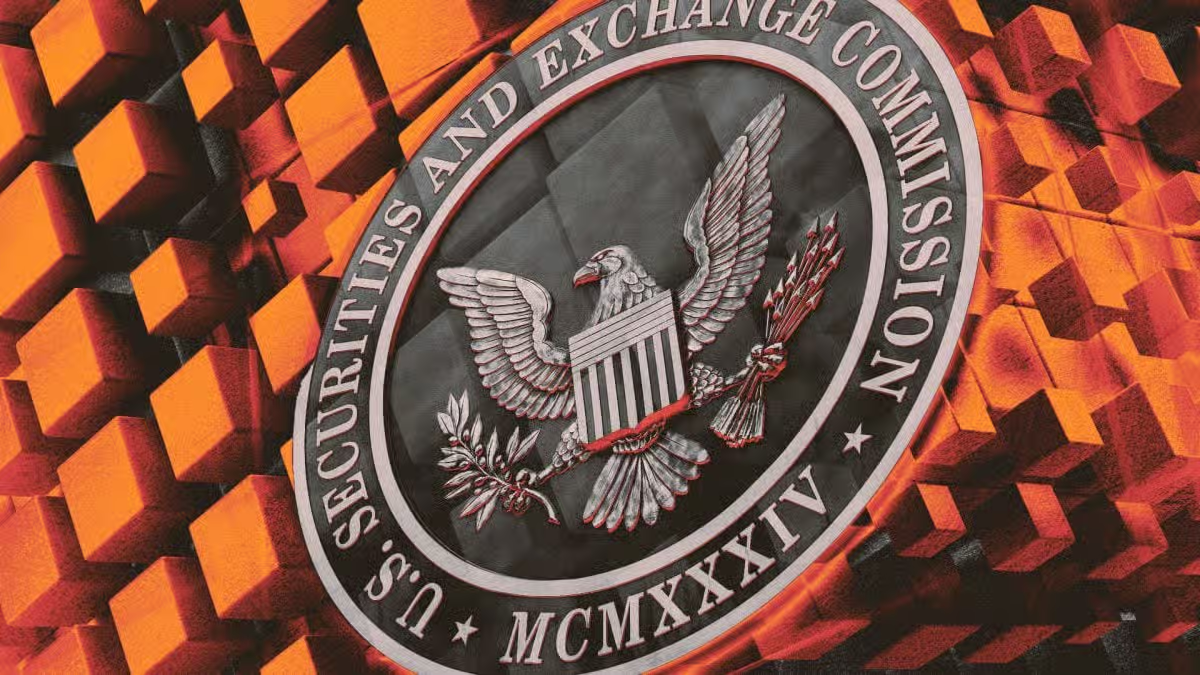
The U.S. Securities and Exchange Commission (SEC) has finalized its enforcement action against NanoBit, a cryptocurrency platform accused of defrauding investors and misappropriating funds. This resolution marks the conclusion of a case initiated in September 2024, which the SEC had previously identified as its inaugural enforcement action targeting relationship investment scams within the digital asset space.
Key Takeaways
- The SEC has reached a final judgment in its case against NanoBit, a crypto platform accused of fraud.
- NanoBit and associated individuals allegedly posed as financial professionals on platforms like WhatsApp to solicit investments.
- Investors were misled about the legitimacy of NanoBit and its affiliate, which was falsely claimed to be SEC-registered.
- The scheme involved promoting non-existent initial coin offerings and misrepresenting investment returns.
- Funds were allegedly diverted to scheme participants, with over $2 million wired to Hong Kong bank accounts and significant crypto assets misappropriated.
- The final judgment mandates over $5 million in penalties against the defendants.
- The SEC also issued an investor alert regarding the use of social media and messaging apps in investment scams.
According to the SEC’s allegations, from September 2023 to June 2024, NanoBit and its co-conspirators cultivated trust with potential investors by presenting themselves as financial experts within WhatsApp groups. These individuals then purportedly steered investors towards NanoBit, falsely asserting that an affiliated entity held SEC registration as a broker-dealer, a claim the agency states was untrue.
The agency further detailed that these purported financial professionals promoted fictitious initial coin offerings (ICOs) as opportunities for investors to achieve substantial returns. However, the SEC contended that no actual transactions occurred on the NanoBit platform. Instead, investor funds were allegedly channeled to scheme participants, with over $2 million transferred to bank accounts located in Hong Kong. Additionally, hundreds of thousands of dollars worth of investors’ cryptocurrency assets were reportedly misappropriated.
The finalized judgment mandates that the involved defendants collectively pay over $5 million in fines. This action underscores the SEC’s ongoing vigilance against fraudulent schemes operating within the digital asset markets. The agency has also reiterated warnings to investors concerning the prevalent use of social media and messaging applications by fraudsters to execute sophisticated investment scams.
Potential Regulatory Precedent and Global Compliance
The resolution of the NanoBit case holds significance for the evolving landscape of cryptocurrency regulation, particularly concerning investment fraud. By specifically identifying and prosecuting this scheme as a “relationship investment scam,” the SEC is signaling increased scrutiny on social engineering tactics used to lure investors into digital asset fraud. This approach may set a precedent for how similar cases involving persuasive, often personalized, online solicitations are handled by regulatory bodies globally.
From a global regulatory perspective, the case highlights the challenges posed by cross-border financial activities and the need for international cooperation. The alleged diversion of funds to Hong Kong underscores the transnational nature of many crypto-related illicit activities. Regulators worldwide, including those implementing frameworks like the European Union’s Markets in Crypto-Assets (MiCA) regulation, are increasingly focused on developing robust mechanisms for investor protection and combating financial crime that transcends national borders. The NanoBit case serves as a practical example of the types of fraud that these comprehensive regulatory frameworks aim to prevent and address, emphasizing the importance of due diligence, registration verification, and vigilant monitoring of digital asset platforms and their associated marketing practices.
Based on materials from : www.theblock.co