

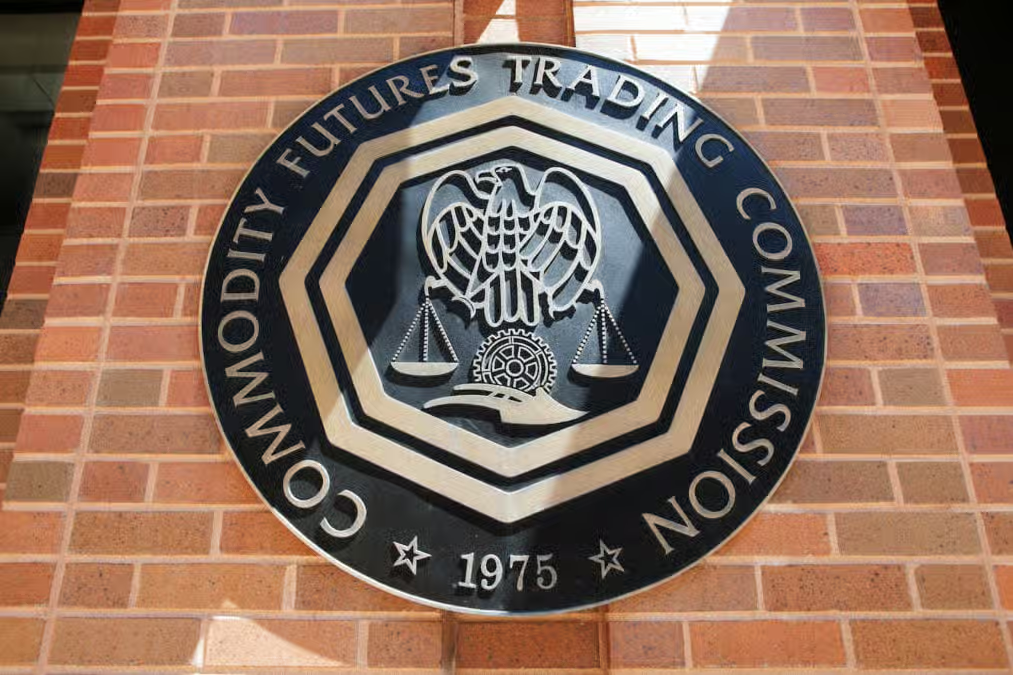
CME Group Initiates Legal Action Against CFTC Over Perpetual Futures Regulation
The CME Group, a prominent global derivatives marketplace, has filed a lawsuit against the Commodity Futures Trading Commission (CFTC) in the U.S. District Court for the District of Columbia. The lawsuit challenges the CFTC’s recent decision to permit the trading of perpetual futures within the United States, with the CME Group accusing the agency of an abrupt and unwarranted shift in regulatory stance.
Key Takeaways
- CME Group is suing the CFTC regarding the agency’s approval of perpetual futures trading in the U.S.
- The CME Group alleges the CFTC has changed its regulatory approach, impacting market competition.
- Perpetual futures are a type of derivative contract without an expiration date, popular in cryptocurrency trading.
- The lawsuit claims the CFTC’s actions violate the Commodity Exchange Act and could harm CME’s existing business.
- The CFTC has publicly refuted the lawsuit, characterizing it as an attempt to stifle competition and innovation.
The CME Group’s complaint, filed by its subsidiary Chicago Mercantile Exchange Inc., asserts that the CFTC’s authorization of perpetual futures for platforms like Kalshi and Coinbase constitutes a circumvention of regulatory frameworks established by Congress. Specifically, the complaint argues that the CFTC Chairman has altered the definition of a “swap” under the Dodd-Frank Act, thereby bypassing the prescribed regulatory regime for such financial instruments. Perpetual futures, characterized by their lack of an expiration date, enable speculation on asset price movements without direct ownership, gaining significant traction in the digital asset derivatives market. The legal filing contends that the introduction of these new derivative products directly competes with CME Group’s established offerings, posing a significant threat of financial injury to the exchange. The CME Group further argues that the CFTC’s approval of perpetual futures for new entrants violates the Commodity Exchange Act, as it effectively permits competitors to enter CME’s retail futures market and vie for its customer base. A point of contention in the lawsuit is also the alleged lack of public comment opportunity for Kalshi’s application, which the CME Group views as a procedural failing by the CFTC. Terrence Duffy, CEO of CME Group, has previously expressed strong reservations about perpetual futures, labeling them as “a disaster waiting to happen.” He articulated the view that these instruments should be classified as swaps under the Dodd-Frank Act. This legal challenge emerges amidst broader discussions about the regulatory landscape for digital assets and derivatives globally, with frameworks like Europe’s Markets in Crypto-Asset (MiCA) regulation setting precedents for comprehensive oversight. A spokesperson for the CFTC strongly rejected the CME Group’s allegations, stating that the lawsuit represents an attempt to employ legal tactics (“lawfare”) against the agency and the current administration’s pro-innovation agenda. The CFTC characterized the suit as an incumbent’s fear of competition on a level playing field and expressed confidence in their ability to have the lawsuit dismissed.
Potential Regulatory Precedent
This legal dispute between CME Group and the CFTC could establish a significant regulatory precedent for the classification and oversight of novel derivative products, particularly those emerging from the cryptocurrency sector. The court’s decision may clarify the boundaries of existing financial regulations, such as the Dodd-Frank Act, in the context of rapidly evolving financial technologies. Should the court rule in favor of the CME Group, it could lead to stricter scrutiny of how the CFTC defines and regulates new financial instruments, potentially impacting the ability of crypto-native exchanges to offer products similar to traditional derivatives. Conversely, if the CFTC’s position is upheld, it could signal a more accommodating regulatory environment for innovation in derivatives trading, provided appropriate compliance measures are met. The outcome will be closely watched by both traditional financial institutions and digital asset firms seeking clarity on regulatory compliance.
On X, the Hyperliquid Policy Center commented that the CME Group’s action was an attempt to suppress competition, stating, “Perpetual futures are the first genuinely new derivatives product to reach U.S.-regulated markets in over a decade. More competition among exchanges is best for the people who actually use these markets. These products deserve clear rules.”
Source: : www.theblock.co