
 Prefer us on Google
  Download App
  Download App
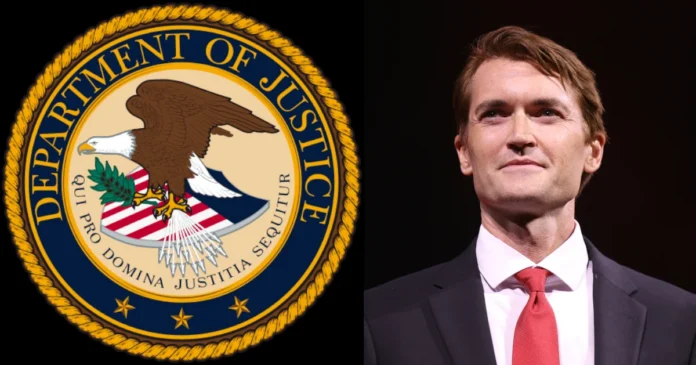
Hedge fund administrator Dan Loeb has publicly asserted that the Justice Department issued a threat to President Donald Trump during the concluding moments of Trump’s initial term in January 2021, cautioning that they would pursue legal action against him if he commuted the sentence of Ross Ulbricht, the architect of the Bitcoin-based Silk Road platform. Following the alleged threat, Trump rescinded the commutation, compelling Ulbricht to serve an additional four years in confinement before receiving a complete pardon in January 2025 during Trump’s second tenure.
Loeb, the originator and chief executive of Third Point LLC, made this disclosure on the All-In Podcast while discussing his involvement in criminal justice reform and Ulbricht’s clemency initiatives. “On the final day of Trump’s 45th term, we were confident that he was going to be released,” Loeb remarked. “And the Justice Department, for unspecified reasons, conveyed to the president, ‘If you commute his sentence, we will pursue you.’ Consequently, he, as far as I understand, withdrew the commutation.”
This account represents the inaugural public disclosure of such a direct warning from the DOJ during the concluding period of Trump’s initial presidency. To date, it has not been independently verified by alternative sources, and no specific DOJ official has been identified as delivering the admonition. The assertion relies on Loeb’s recollection, likely relayed through the advocacy network that comprised cryptocurrency figures such as Riva Tez, Charlie Kirk, and then-White House counsel David Warrington.
DOJ Leadership in January 2021
Jeffrey A. Rosen held the position of Acting Attorney General subsequent to William Barr’s departure in late December 2020. Richard Donoghue served as Acting Deputy Attorney General. The Office of the Pardon Attorney, a DOJ division responsible for reviewing clemency petitions and issuing recommendations, operated under their supervision. Presidents, including Trump, frequently circumvented standard OPA protocols for cases carrying political sensitivities.
The purported threat seems to have extended significantly beyond the customary advisory input from the DOJ concerning matters like sentence proportionality, the impact on victims, or enforcement priorities. Ulbricht was serving a sentence of double life imprisonment plus 40 years following his conviction in 2015 on charges that included operating a continuing criminal enterprise, distributing narcotics via the internet, money laundering, and hacking. Contrary to common perception and widely disseminated insinuations by mainstream media outlets, Ulbricht was never prosecuted for any charges linked to murder-for-hire plots.
Silk Road, which principally utilized Bitcoin for its transactions, symbolized one of the initial large-scale trials of employing an alternative currency to the dollar, thereby establishing the case and its history as fundamental to the Bitcoin community.
A warning articulated as potential reprisal against the President himself would signify an extraordinary escalation in the strained relationship between the executive branch and the Department of Justice concerning clemency powers. Such opposition likely originated from institutional apprehensions regarding the appearance of leniency in significant drug trafficking and money laundering cases associated with the nascent Bitcoin economy.
Four-Year Delay and Political Ramifications
The reported intervention by the DOJ in the final days of Trump’s initial term resulted in Ulbricht spending four additional years incarcerated. As Loeb recounted, Charlie Kirk subsequently assumed the primary role in the clemency effort. “This was his sole request of the president,” Loeb stated, referencing Kirk. Kirk’s advocacy was instrumental in transforming Ulbricht’s release into Trump’s principal pledge to libertarians and the cryptocurrency community during the 2024 election campaign. Trump fulfilled that commitment with a complete and unconditional pardon early in his second term.
Coincidentally, the postponement intensified the “Free Ross” movement. What commenced as advocacy for clemency in a case perceived by many within Bitcoin circles as a prime example of governmental overreach evolved into a formidable political entity. The campaign brought attention to issues of disproportionate sentencing, self-custody, privacy tools, and opposition to the broadly unpopular and ineffective prohibition policies, core tenets of Bitcoin’s philosophy of financial independence and of significant importance to the libertarian voting demographic. This momentum and Trump’s pledge to pardon Ulbricht are widely considered to have secured Trump the libertarian and crypto vote in 2024.
Broader Context for Bitcoin
Loeb characterized his involvement in Ulbricht’s case as part of a wider initiative for criminal justice reform, connecting it to his broader philanthropic endeavors in education and concerns about opportunity and income disparity. He identified three categories for clemency: the wrongly convicted, the rehabilitated, and those subjected to excessively severe sentences. Ulbricht, who admitted to misconduct on Silk Road while refuting murder-for-hire accusations, fell into the latter category according to Loeb’s evaluation.
This event underscores the persistent friction between law enforcement, advancements in Bitcoin, and the libertarian ethos that constitutes a substantial segment of the American populace. Silk Road, among the earliest Bitcoin marketplaces, continues to serve as a reference point in discussions concerning decentralization, privacy, and regulatory intrusion. Comparable cases continue to attract scrutiny within the Bitcoin community, including Bitcoin advocate Ian Freeman, the developers of the Samourai Wallet privacy utility, and Roman Storm of Tornado Cash—all facing accusations that many interpret as assaults on libertarian leaders, the freedom of commerce, self-custody, and financial privacy instruments.
Information compiled from materials : bitcoinmagazine.com