

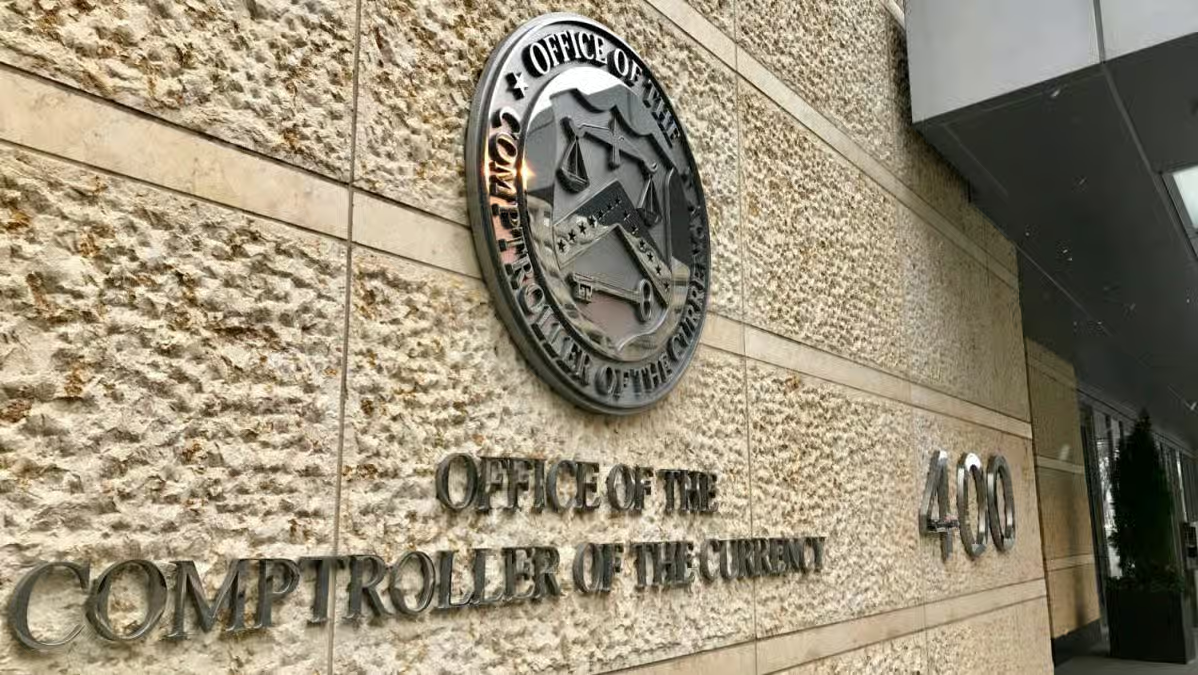
The Digital Chamber (TDC), an industry group representing over 250 cryptocurrency-related entities, has formally contested accusations made by U.S. Senator Elizabeth Warren regarding the legality and regulatory standing of national trust charters granted to several digital asset firms. The TDC’s response, submitted in a letter to the Office of the Comptroller of the Currency (OCC), directly addresses Senator Warren’s assertion that these approvals constitute violations of the National Bank Act.
Key Takeaways
- The Digital Chamber, a significant industry association for crypto firms, has refuted Senator Elizabeth Warren’s claims that national trust charters granted to crypto companies are unlawful.
- Senator Warren had previously stated that approvals for firms including Ripple, Circle, Paxos, Fidelity, BitGo, and Coinbase violate the National Bank Act and do not adhere to the same standards as traditional banks.
- TDC argues that the OCC possesses longstanding chartering authority and that the recent approvals align with its mandate and the evolving regulatory landscape.
- The debate highlights ongoing tensions between traditional finance and the digital asset sector, particularly concerning federal banking charters and stablecoin regulation.
Senator Warren’s initial letter to the OCC expressed concern that recently approved digital asset firms, such as Ripple, Circle, Paxos, Fidelity Digital Assets, BitGo, and Coinbase, had been granted national trust charters in contravention of the National Bank Act. She argued that these entities were not operating under the same stringent requirements as established financial institutions.
In its rebuttal, The Digital Chamber, led by CEO Cody Carbone, stated that Senator Warren’s characterization of these approvals as “apparent violations” misinterprets both the relevant statute and the OCC’s historical authority. The group emphasized that the OCC has consistently exercised its chartering powers.
A growing number of cryptocurrency companies have pursued OCC approval to function as federally regulated trust banks within the United States. Last year, the OCC issued conditional approvals to several prominent firms, including Ripple, Circle, BitGo, Fidelity Digital Assets, and Paxos. These charters, if finalized, would permit these companies to custody client assets, though they typically exclude the ability to accept deposits or issue loans, distinguishing them from full-service traditional banks.
This regulatory discourse occurs amidst broader friction between the traditional financial sector and the cryptocurrency industry. Key areas of contention include the process for obtaining federal bank charters and the regulatory treatment of stablecoin interest. The latter issue recently saw progress with lawmakers advancing comprehensive cryptocurrency legislation.
Senator Warren had also suggested that some companies sought federal charters in direct response to legislation passed the previous summer aimed at regulating stablecoins, known as the Guiding and Establishing National Innovation for U.S. Stablecoins (GENIUS) Act. She contended that this new legislation does not alter the fundamental provisions of the National Bank Act.
TDC’s CEO, Cody Carbone, countered this point, asserting that it would be contradictory for Congress to create a new framework for federally regulated stablecoin issuers if the OCC were to refrain from utilizing its existing chartering authority. This exchange underscores the complex legal and regulatory environment in which digital asset firms are seeking to operate and gain legitimacy within the established financial system.
Potential Regulatory Precedent
The exchange between The Digital Chamber and Senator Warren concerning OCC trust charters for crypto firms sets a significant precedent for regulatory interpretation and future enforcement. The TDC’s defense relies on the OCC’s inherent chartering authority and its adaptability to emerging financial technologies. Should the OCC continue to grant charters, and if these are legally challenged and upheld, it could solidify a pathway for digital asset companies to operate under federal banking oversight without necessarily conforming to all aspects of traditional bank regulation. Conversely, if regulatory bodies or courts side with arguments like Senator Warren’s, it could lead to a more restrictive environment, potentially requiring crypto firms to meet stricter capital and compliance standards or face limitations on their business models. This ongoing debate is crucial for shaping how digital assets are integrated into the broader financial infrastructure and impacts the legal stakes for companies like Ripple and Coinbase, which are actively seeking regulatory clarity and expanded operational frameworks in the U.S.
According to the portal: www.theblock.co