

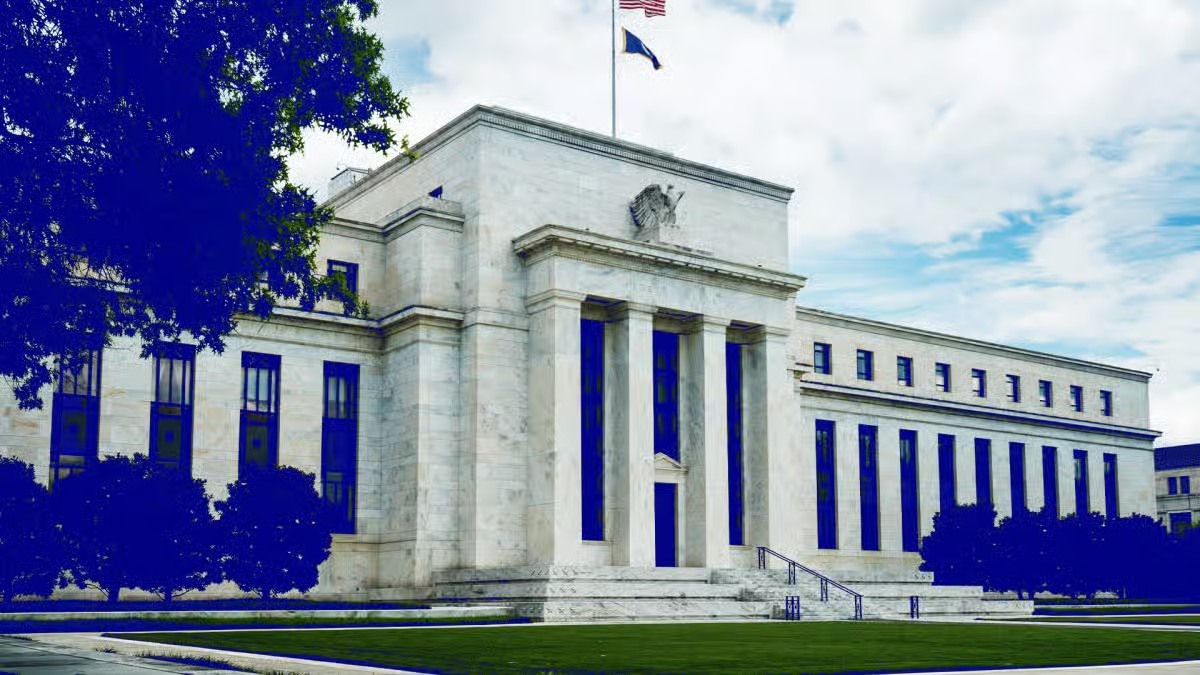
The U.S. Federal Reserve has initiated a public consultation process concerning a proposed new payment account structure that could grant specific cryptocurrency firms direct access to the central bank’s payment and settlement infrastructure. This move comes as the Fed observes a growing number of applications for its payment services from entities that are not federally insured depository institutions.
Key Takeaways
- The Federal Reserve is seeking public commentary on a proposal to offer a novel payment account designed for eligible institutions, including certain crypto firms.
- This initiative aims to facilitate innovation in digital assets by enabling direct participation in the U.S. payment system, bypassing traditional intermediary banks.
- The proposal follows an executive order from President Trump, which mandates a review of existing regulations to better integrate digital assets and related technologies into conventional financial frameworks.
- The Fed has advised Reserve Banks to temporarily suspend decisions on applications from non-depository institutions, such as crypto firms, while this policy development is underway.
- The proposed account would provide access to payment services but would not extend benefits like intraday credit, discount window access, or interest on balances.
The central bank stated that the new account would be specifically designed to support innovation by addressing the clearing and settlement requirements of certain eligible institutions while simultaneously managing potential risks to the Reserve Banks and the broader payment system. Currently, under the Federal Reserve Act, Reserve Banks possess the authority to approve or reject applications for access to Fed accounts, with qualified applicants typically being licensed depository institutions.
This latest proposal shares significant similarities with a previous version introduced in December 2025. The revised plan includes adjustments such as an increased maximum closing balance for these accounts. Although the account holders would gain access to payment services facilitated by automated controls, they would not be eligible for intraday credit, borrowing from the discount window, or earning interest on their balances held at the Fed.
Potential Regulatory Precedent
The Federal Reserve’s active solicitation of public input on this matter, particularly concerning access for non-traditional financial entities, carries significant implications for the future regulatory landscape of digital assets in the United States. The framework developed through this process could establish a precedent for how other central banks and regulatory bodies approach the integration of crypto and fintech firms into established financial systems. By considering a dedicated account structure, the Fed is exploring a pathway that balances the potential benefits of technological innovation with the imperative of maintaining financial stability and mitigating systemic risks. This proactive engagement suggests a more structured approach to digital asset regulation, potentially moving away from purely restrictive measures towards a model that accommodates and governs new technologies within existing infrastructures.
The initiative aligns with a broader directive issued by President Donald Trump via an executive order on Tuesday. This order specifically instructed the Federal Reserve to conduct a comprehensive assessment of its regulatory framework concerning access to Reserve Bank accounts and payment services. The objective is to identify and implement updates that would permit the integration of digital assets and associated technologies into traditional financial services and payment systems, signaling a governmental interest in fostering innovation within this sector.
In light of this ongoing review, the Federal Reserve’s Board has recommended that Reserve Banks implement a temporary moratorium on decisions regarding applications from Tier 3 institutions—a category encompassing many crypto firms. This pause is intended to allow the Board sufficient time to finalize its policy development concerning the proposed expanded master account access, ensuring a coordinated and consistent approach to this evolving area of finance.
Source: : www.theblock.co