

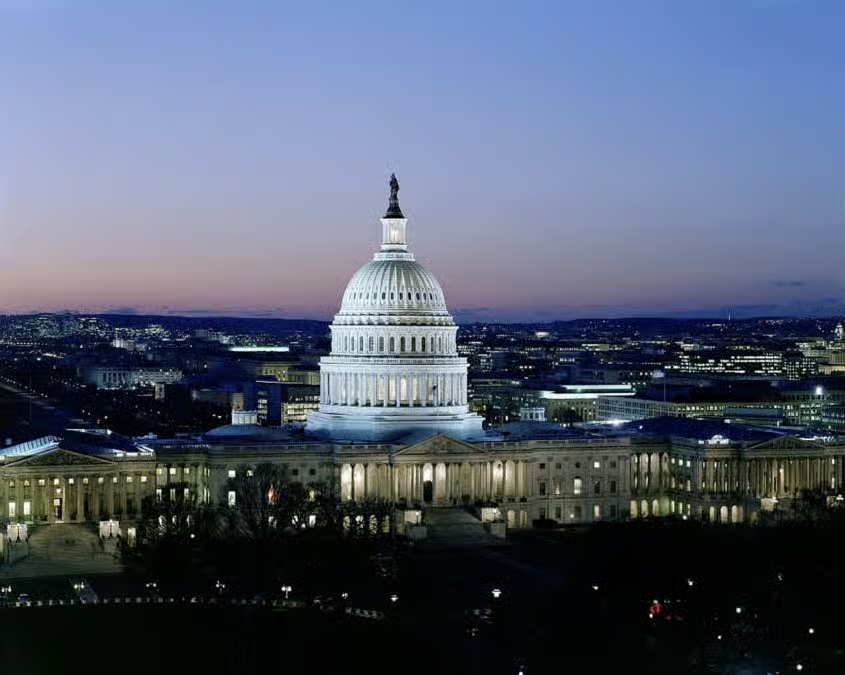
The U.S. Senate Banking Committee has advanced a significant piece of cryptocurrency legislation, signaling a critical juncture for regulatory clarity within the digital asset sector. The vote, which saw the bill move forward with a 15-9 majority, has been met with a mixture of celebration and concern from various industry participants and stakeholders.
Key Takeaways
- The Senate Banking Committee voted to advance a comprehensive crypto market structure bill.
- The legislation’s progress is attributed to ongoing negotiations concerning ethics regulations for federal officials and protections for DeFi developers.
- Certain industry groups have lauded the vote as a positive step towards regulatory certainty, while others express reservations about specific concessions made.
- The bill now faces further reconciliation with another Senate committee’s version before a full Senate vote.
- Disagreements persist between the banking industry and crypto proponents regarding stablecoin regulations.
The advancement of the bill marks a notable moment, particularly as it garnered support from key Democratic Senators whose backing was contingent on the resolution of specific issues. Senators Ruben Gallego and Angela Alsobrooks voted in favor, provided that concerns related to law enforcement, financial crimes, and the ethical use of digital assets by federal officials are adequately addressed. Senator Alsobrooks emphasized that her vote was an endorsement to continue good-faith negotiations rather than a commitment to the bill’s final passage on the Senate floor.
Ethics in digital asset transactions for public officials emerged as a pivotal point for Democratic support. Senator Gallego indicated his opposition on the Senate floor if measures preventing the President, Vice President, and other federal officials, along with their families, from engaging in certain digital asset transactions are not resolved. Discussions surrounding these ethical provisions have been ongoing, with representatives from the Digital Chamber expressing optimism about recent progress.
Potential Regulatory Precedent
The legislative developments surrounding this crypto bill could establish a significant regulatory precedent for the United States. The inclusion of detailed provisions on market structure, non-custodial developer protections, and ethics for public officials addresses multifaceted aspects of the digital asset ecosystem. If enacted, this framework might serve as a blueprint for future legislation not only within the U.S. but also as an influential model for international regulatory bodies seeking to establish clear rules for cryptocurrencies and decentralized finance (DeFi). The careful balancing act between fostering innovation and ensuring robust consumer protection and financial stability will be closely watched as a determinant of the U.S.’s long-term approach to digital assets.
Despite the positive reception from some quarters, concerns have been raised regarding concessions made to secure Democratic votes. Specifically, the Blockchain Regulatory Certainty Act (BRCA), which aims to exempt non-custodial developers from being classified as money transmitters, faced modifications. A significant concession reportedly involved the removal of non-custodial developer protections from Section 301 of the bill, which pertains to establishing rules for DeFi under the Bank Secrecy Act. This alteration has drawn criticism from organizations advocating for DeFi developer rights.
Industry leaders have voiced strong opinions on the committee’s vote. Ji Kim, CEO of the Crypto Council for Innovation, described the event as a “decisive turning point.” Similarly, Summer Mersinger, CEO of the Blockchain Association, called it a “defining moment,” underscoring the necessity of bipartisan support for sustainable digital asset policy. Brian Armstrong, CEO of Coinbase, characterized the day as “historic,” noting improvements in areas such as stablecoin rewards, tokenization, DeFi, and the Commodity Futures Trading Commission’s (CFTC) authority, particularly in comparison to earlier legislative efforts.
However, traditional banking groups, including the American Bankers Association and the Bank Policy Institute, while acknowledging the bill as a step toward a regulatory framework, have called for more stringent measures, particularly concerning stablecoin reward offerings. They argue that without adequate safeguards, stablecoins could divert substantial bank deposits, impacting local lending and economic activity. These groups intend to continue advocating for enhanced protections as the bill progresses.
According to the portal: www.theblock.co