

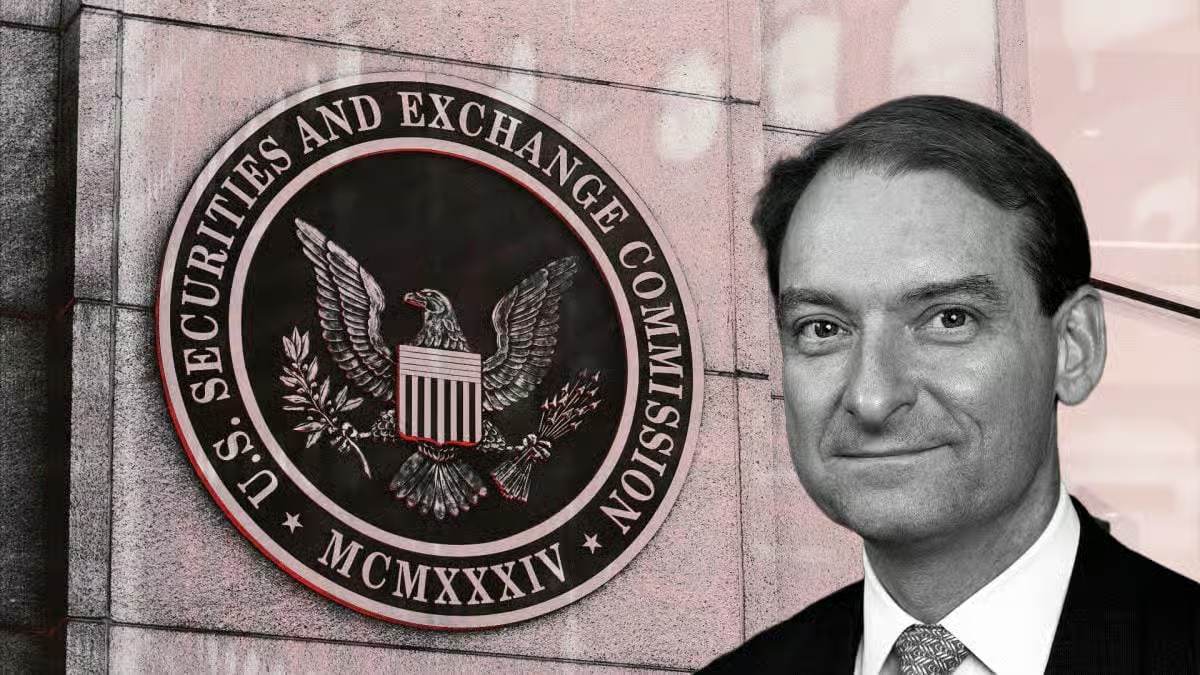
Securities and Exchange Commission Chair Paul Atkins has indicated a shift in regulatory thinking regarding the application of existing frameworks to onchain market structures and associated software. Atkins stated that the agency must clarify how its traditional definitions of financial intermediaries, such as clearing agencies, brokers, and exchanges, apply to modern software applications operating within decentralized finance (DeFi) and onchain environments. This initiative suggests a move towards adapting regulatory principles to the unique characteristics of blockchain-based financial systems.
Key Takeaways
- The SEC is examining how its existing regulatory definitions apply to onchain market structures and software applications.
- Chair Paul Atkins noted that current software architectures do not always fit traditional regulatory categories like broker, exchange, or clearing agency.
- The commission is considering notice and comment rulemaking to update these definitions for onchain trading systems.
- This approach signals a potentially more accommodating stance towards digital assets and blockchain technology compared to previous administrations.
- Industry groups have responded positively to the outlined direction, emphasizing the need for tailored regulatory frameworks.
Speaking at an artificial intelligence expo, Atkins elaborated that the complex functionalities of current software protocols, which can encompass trading, collateral management, liquidity routing, and transaction settlement within a single automated system, challenge conventional regulatory classifications. He emphasized that these onchain systems are often hybrid, blending elements of traditional finance and decentralized models.
Atkins’ remarks contrast with the more stringent approach taken by his predecessor, Gary Gensler, who generally viewed most cryptocurrencies as securities subject to SEC oversight. Under Atkins, the SEC has explored concepts such as an innovation exemption for tokenized securities and released a taxonomy to help distinguish digital assets that may qualify as securities. The agency’s Division of Trading and Markets also recently issued a staff statement indicating that DeFi wallets, as interfaces, would generally not be classified as brokers.
The SEC Chair advocated for a comprehensive review through notice and comment rulemaking to reassess definitions pertinent to exchanges, clearing agencies, and brokers within the context of onchain trading. He also called for greater clarity regarding crypto vaults, which are onchain applications designed for passive yield generation. Atkins stressed the importance of a collaborative process involving innovators, investors, and the public to ensure that regulatory considerations are inclusive and pragmatic.
Potential Regulatory Precedent
The SEC’s consideration of new rulemaking for onchain market structures and software applications could establish a significant regulatory precedent for the global digital asset industry. By actively seeking to adapt existing legal frameworks rather than solely applying pre-blockchain era definitions, the commission may pave the way for clearer compliance pathways for decentralized technologies. This could influence regulatory bodies in other jurisdictions, potentially leading to more harmonized international approaches to digital asset regulation. The emphasis on notice and comment rulemaking, alongside the potential use of exemptive authorities, suggests a commitment to a flexible and iterative regulatory process, which could foster innovation while mitigating systemic risks. This approach may also encourage greater participation from traditional financial institutions looking to engage with tokenized assets and blockchain infrastructure.
Industry participants have generally welcomed Atkins’ statements. The DeFi Education Fund characterized the comments as “powerful,” while the Hyperliquid Policy Center expressed encouragement for a chairman willing to adapt existing legal frameworks to new systems rather than forcing them into outdated categories. This positive reception highlights the industry’s desire for regulatory clarity and a supportive environment for technological advancement.
Learn more at : www.theblock.co