

 Prefer us on Google
  Download App
  Download App
Clarification: This report initially stated that Jason Lowery was appointed Special Assistant to the Commander INDOPACOM in April 2026. In reality, he assumed the role as early as August 2025.
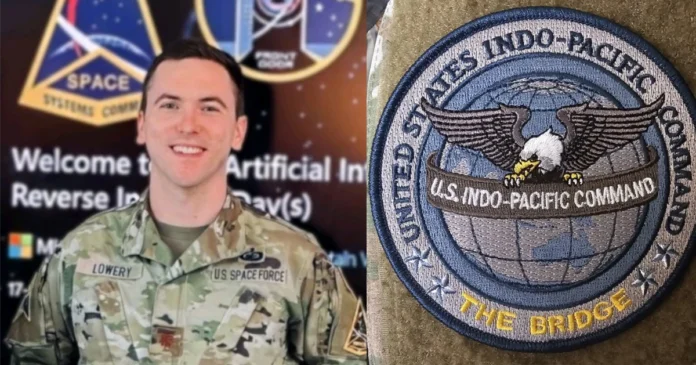
Jason Lowery, previously the Deputy Director of Technology & Innovation at the United States Space Force and author of Softwar: A Novel Theory on Power Projection and the National Strategic Significance of Bitcoin, revealed his appointment as Special Assistant to the Commander, U.S. Indo-Pacific Command in August 2025. This week, his superior, Admiral Samuel Paparo, addressed the Senate Armed Services Committee, referencing Bitcoin favorably as a method for “power projection,” a concept popularized by Lowery in his scholarly writings on Bitcoin.
In an August 2025 LinkedIn post, Lowery expressed his honor at receiving the appointment, stating, “In this new capacity, I will provide direct counsel and report to the Combatant Commander concerning strategic objectives pertinent to the Department of Defense and the Indo-Pacific region.” Lowery further commented, “It is a humbling obligation during a crucial period for our national security posture. I am appreciative of the confidence shown in me to support this level of leadership and eager to contribute to the mission.”
Lowery gained prominence in the Bitcoin community by arguing that Bitcoin represents a new frontier in military technology and defense, where power is exerted not through conventional weaponry but by controlling greater hashing power, which underpins Bitcoin’s proof-of-work consensus mechanism. Those who command sufficient hashing power can ensure their Bitcoin transactions are confirmed. In severe circumstances, entities dominating the hash rate could disrupt the confirmation of their adversaries’ transactions. This theory, best grasped through Lowery’s publications, posits Bitcoin as a transformative development in military technology, comparable to the advent of gunpowder or aviation.
The Senate Armed Services Committee hearing occurred shortly after reports surfaced in the Financial Times indicating that Iran intended to accept Bitcoin for passage through the Strait of Hormuz. Although the “Bitcoin Toll of Hormuz” has not yet materialized, the story garnered international attention and seemingly reached influential circles in Washington D.C. and the Department of Defense.
While the Gulf states and the Strait of Hormuz fall under the purview of a different Department of Defense command, CENTCOM, Admiral Paparo’s remarks on Bitcoin during the hearing nonetheless underscore the recognition of its geopolitical strategic importance. Lowery’s advisory role encompasses a vast territory, including China and the Indian and Pacific Ocean regions, many of which heavily rely on Gulf oil traversing Hormuz. Pre-war estimates suggested China sourced approximately 42% of its oil from affected Gulf states.
Details can be found on the website : bitcoinmagazine.com