

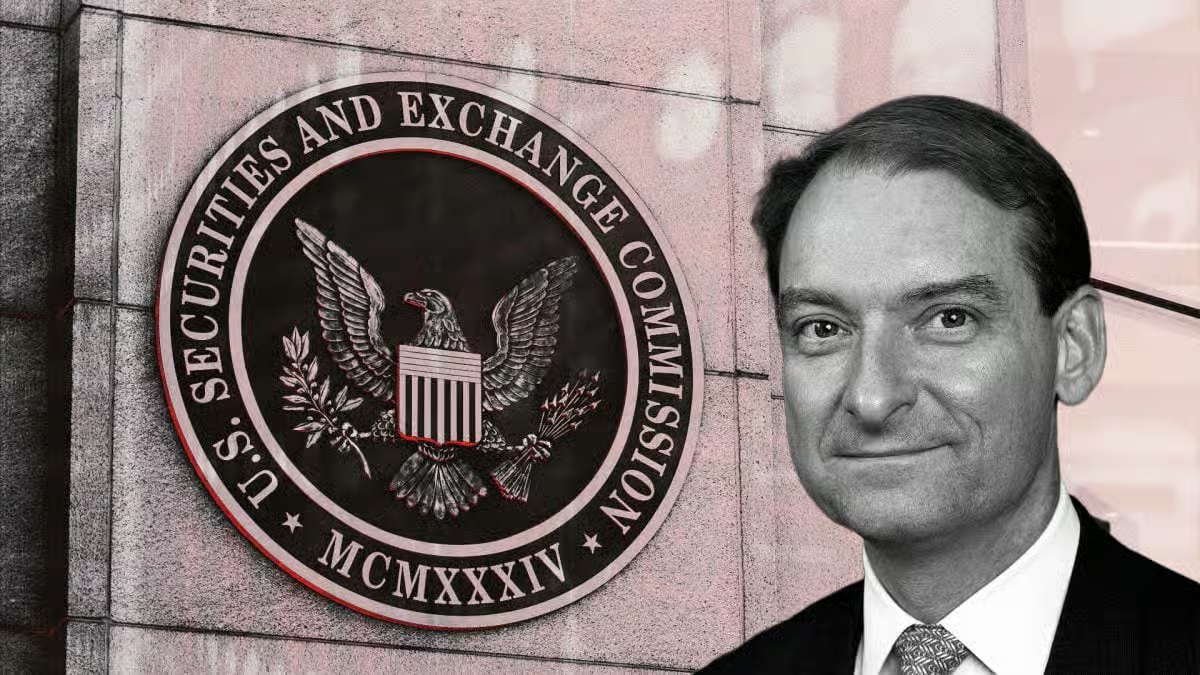
Regulatory Shift Under SEC Chair Atkins
Securities and Exchange Commission (SEC) Chair Paul Atkins has articulated a strategic objective to “advance, clarify and transform” (ACT) cryptocurrency regulations within his first year at the agency’s helm. This initiative signals a departure from the SEC’s prior emphasis on enforcement-driven oversight, aiming instead for a more proactive and accommodating stance towards digital assets and blockchain innovation.
Key Takeaways
- SEC Chair Paul Atkins is pursuing a regulatory strategy focused on advancing, clarifying, and transforming the crypto landscape.
- The agency is shifting away from a “regulation through enforcement” model towards greater embrace of new technologies.
- Efforts are underway to update SEC rules for digital assets, including “Project Crypto” and the planned introduction of an innovation exemption.
- This approach contrasts with the previous administration’s focus on enforcement actions against crypto firms.
- The SEC is also scrutinizing prediction markets due to concerns about potential manipulation and insider trading.
In a recent interview, Chair Atkins stated that the SEC is actively working to welcome and integrate innovative technologies, encouraging companies that may have previously operated offshore to establish a U.S. presence. This pivot is designed to foster domestic growth and product development within the digital asset space. Since assuming leadership, Atkins has initiated “Project Crypto” to modernize the SEC’s digital asset framework and has overseen the release of a new taxonomy, with plans to implement an innovation exemption to streamline regulatory processes for emerging technologies.
This evolving regulatory philosophy stands in stark contrast to the approach taken under former SEC Chair Gary Gensler. During Gensler’s tenure, the agency adopted a more cautious stance, initiating numerous legal actions against prominent crypto companies. Many of these cases asserted that a significant portion of cryptocurrencies qualified as securities. Critics often characterized this period as “regulation by enforcement,” a label that many of the subsequent legal outcomes have challenged.
Regulatory Precedent and Emerging Concerns
The SEC’s current direction, particularly its focus on fostering innovation while addressing emerging risks, could set a significant precedent for global regulatory frameworks. As regions like the European Union implement comprehensive legislation such as the Markets in Crypto-Assets (MiCA) regulation, the U.S. approach under Chair Atkins may influence how other jurisdictions balance technological advancement with investor protection and market integrity. The emphasis on clarity and transformation suggests a potential move towards more tailored and principles-based regulations, which could provide greater certainty for businesses operating in the digital asset sector.
Concurrently, regulatory bodies are intensifying their focus on prediction markets, platforms that enable users to speculate on future events ranging from political outcomes to economic indicators and sports results. Companies such as Polymarket and Kalshi have seen substantial growth in user engagement, particularly since the 2024 election cycle.
The Commodity Futures Trading Commission (CFTC), under Chair Michael Selig, has asserted its jurisdictional authority over these markets. However, this stance faces opposition from some states that argue these platforms may contravene existing local gaming and gambling statutes, especially concerning sports-related wagers.
Questions have been raised regarding the potential for market manipulation and insider trading, particularly in light of comments made by public figures that can influence market movements. Lawmakers have expressed concerns about the vulnerability of prediction markets to manipulation and have proposed legislation to prohibit event contracts tied to conflict and to prevent elected officials from engaging in prediction market bets related to government policy or political results.
Chair Atkins acknowledged these concerns, stating that the SEC is actively examining the prediction market landscape. He indicated that while specific investigations cannot be discussed, the issue is a matter of significant regulatory attention, involving collaboration between the Department of Justice, the CFTC, and the SEC. The inherent traceability of transactions on these platforms is a key factor in ongoing regulatory scrutiny.
Details can be found on the website : www.theblock.co