

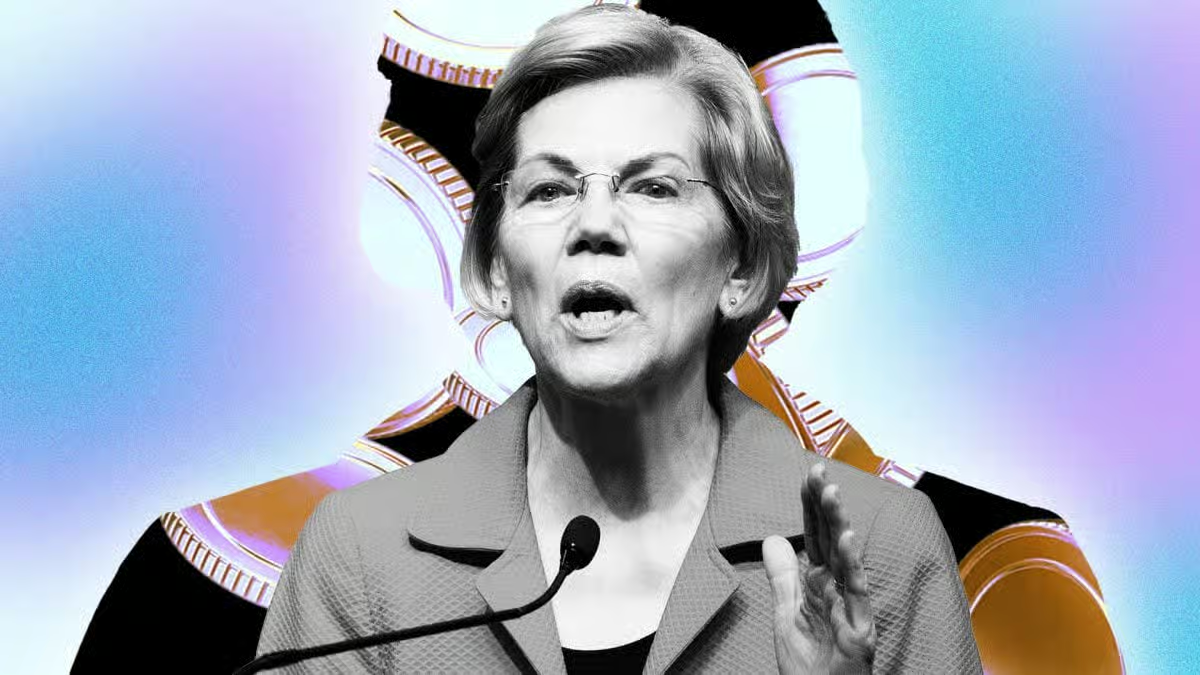
Democratic Senators Elizabeth Warren and Ron Wyden have initiated an inquiry into Tether, the world’s largest stablecoin issuer, and Commerce Secretary Howard Lutnick concerning a reported loan extended to a family trust benefiting Lutnick’s children. The senators’ correspondence targets both Lutnick and Tether CEO Paolo Ardoino, seeking clarification on whether Tether has engaged in any attempts to unduly influence the Commerce Secretary through this financial arrangement.
Key Takeaways
- Senators Warren and Wyden are investigating a loan from Tether to a trust for Commerce Secretary Howard Lutnick’s children.
- The inquiry aims to ascertain if the loan constitutes a potential conflict of interest or an attempt to influence the Secretary.
- Tether and Cantor Fitzgerald, led by Lutnick’s sons, have had close ties since 2021, with Cantor serving as a custodian for Tether’s reserves.
- The senators also raised concerns about Tether’s lobbying efforts related to the GENIUS stablecoin act and its past regulatory issues.
- The investigation highlights broader concerns within Congress regarding conflicts of interest in the digital asset sector.
Howard Lutnick assumed the role of Commerce Secretary in February 2025, following his tenure leading Cantor Fitzgerald. This firm is currently managed by his sons. Since 2021, Cantor Fitzgerald and Tether have maintained a significant business relationship, with Cantor acting as a custodian for Tether’s reserves. Reports surfaced last month indicating that around the time Lutnick divested his ownership in Cantor Fitzgerald to trusts established for his children, one such trust secured an undisclosed loan from Tether. Federal regulations require appointees to divest assets to prevent conflicts of interest, but ethics experts have suggested that including children in trusts could undermine these safeguards.
Senators Warren and Wyden expressed apprehension regarding this situation, stating in their letter, “This document raises questions about whether Tether may have helped provide Secretary Lutnick’s children with the capital needed to purchase their father’s stake in Cantor Fitzgerald, and in return secured an interest in his children’s assets. If true, that would be a startling revelation.”
The senators also referenced the GENIUS stablecoin act, enacted into law last year, noting Tether’s involvement in lobbying for the bill. This development occurs as the Senate Banking Committee, with which Senator Warren is closely affiliated, has been contemplating comprehensive legislation for the cryptocurrency market structure, with a particular focus on conflicts of interest.
“The close relationship he had with Tether prior to his nomination, and the favorable treatment Tether received in the GENIUS Act, make reports of a loan from Tether to his children’s trust even more troubling,” the senators elaborated. “The GENIUS Act may now be the law, but as Congress considers digital asset market structure legislation, we must ensure that politically connected crypto interests do not receive special treatment and undermine our national security.”
The senators also brought attention to Tether’s prior regulatory challenges. In 2021, the company settled charges with the Commodity Futures Trading Commission for allegedly misrepresenting its reserve backing. Furthermore, reports from 2024 indicated that the Department of Justice had explored potential sanctions against Tether due to its alleged use by illicit organizations.
Tether has asserted its role in assisting governmental efforts to combat illicit activities, including measures to seize USDT linked to fraud and international crime. However, Warren and Wyden noted in their letter, “Tether is seen as a ‘dream currency’ for money launderers… The Department of Justice was reportedly investigating Tether as recently as 2024 for potential violations of sanctions and anti-money laundering rules.”
The Commerce Department and Tether had not issued immediate responses to requests for comment at the time of reporting.
Potential Regulatory Precedent
This inquiry by Senators Warren and Wyden into the financial ties between Tether and the family trust of a high-ranking government official, particularly in the context of a major stablecoin issuer with a history of regulatory scrutiny, could set a significant precedent. It underscores a heightened focus on potential conflicts of interest and regulatory capture within the digital asset space. As Congress continues to deliberate on comprehensive digital asset legislation, as exemplified by discussions surrounding market structure, this case may serve as a critical case study. It could influence the inclusion of stricter disclosure requirements, enhanced ethical guidelines for officials involved with or nominated to positions overseeing industries with significant cryptocurrency ties, and more robust enforcement mechanisms to prevent undue influence by industry players on policy and regulation. The senators’ direct questioning of whether the loan could have secured “an interest in his children’s assets” points to a potential expansion of scrutiny into indirect financial relationships and their implications for public trust and national security.
According to the portal: www.theblock.co