

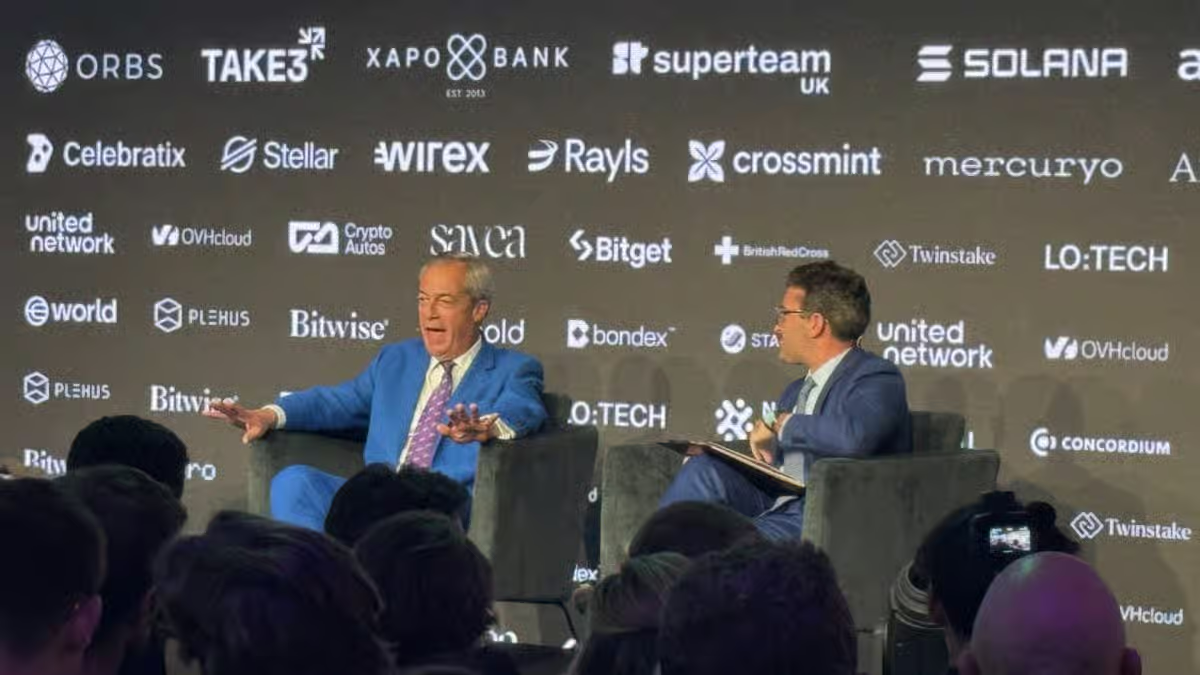
A significant financial transaction involving a major stakeholder in Tether and Nigel Farage has come to light, intensifying scrutiny over the funding sources of the Reform UK party. Reports indicate that Christopher Harborne, a substantial shareholder in Tether, the issuer of the USDT stablecoin, provided a gift of approximately £5 million to Nigel Farage in 2024, designated for security expenses.
Farage, as quoted in a recent report, stated that the funds were intended to ensure his personal safety. This disclosure follows a history of security concerns, including past incidents targeting Farage. The payment was reportedly structured as a personal gift and has not been formally declared under current UK campaign finance regulations.
Christopher Harborne, who also holds British citizenship, has been identified as one of the primary financial supporters of Reform UK, the political party led by Farage. Publicly available filings indicate that Harborne’s contributions to the party, excluding this recent security gift, amount to around £12 million.
Key Takeaways
- A £5 million gift from Tether stakeholder Christopher Harborne to Nigel Farage was recently revealed.
- The funds were reportedly intended for Farage’s personal security costs.
- This transaction was structured as a personal gift and not declared under UK campaign finance laws.
- Harborne has previously donated over £12 million to Reform UK, making him a significant financial backer.
- The development occurs shortly after the UK implemented a ban on political donations made in cryptocurrency.
Regulatory Implications and Precedents
The situation underscores the increasing intersection of the cryptocurrency sector with political finance and regulatory oversight. While this specific transaction involves a personal gift rather than a direct political donation in crypto, it raises questions about transparency and the potential for indirect influence. The UK’s recent move to prohibit crypto-based political donations reflects a broader global trend of governments seeking to enhance the integrity of political funding by preventing the obfuscation of fund origins and mitigating risks of foreign interference.
The legal stakes for companies and individuals involved in the cryptocurrency space are becoming more pronounced as regulators worldwide work to establish comprehensive frameworks. Assets like stablecoins, while offering utility in digital commerce, also present challenges for financial surveillance. The UK’s decision to ban crypto donations, framed as a measure to “protect democracy,” signifies a cautious approach to digital assets within the political arena, potentially setting a precedent for how such financial flows are managed in other jurisdictions.
Analysis of Potential Regulatory Precedents
This event, coupled with the UK’s recent ban on crypto political donations, could influence future regulatory discussions and actions concerning digital assets and their role in political financing. The focus on the origin and transparency of funds, whether in fiat or digital currency, is likely to intensify. Jurisdictions may consider more stringent disclosure requirements for significant financial contributions, particularly when linked to individuals with substantial interests in the cryptocurrency industry. The regulatory precedent here may lean towards greater scrutiny of any financial ties between the crypto sector and political entities, emphasizing clear reporting and anti-money laundering principles, irrespective of the form the contribution takes.
According to the portal: www.theblock.co