
 Prefer us on Google
  Download App
  Download App
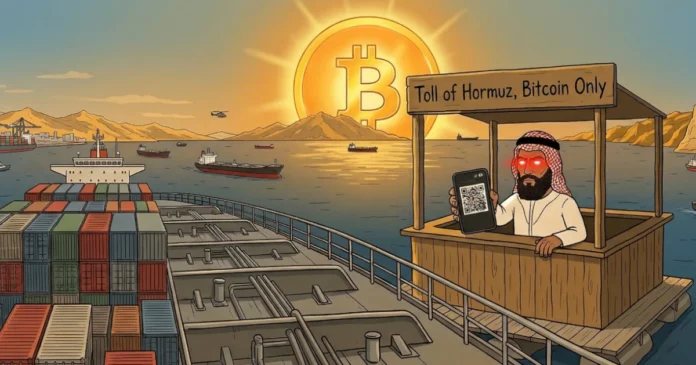
Iran’s command over the Strait of Hormuz, a critical maritime transit point for oil, remains strong. The Financial Times reported last week that Iran plans to impose a levy for passage, designating Bitcoin as the preferred currency. Here’s the reasoning behind this unexpected development, long anticipated by Bitcoin proponents.
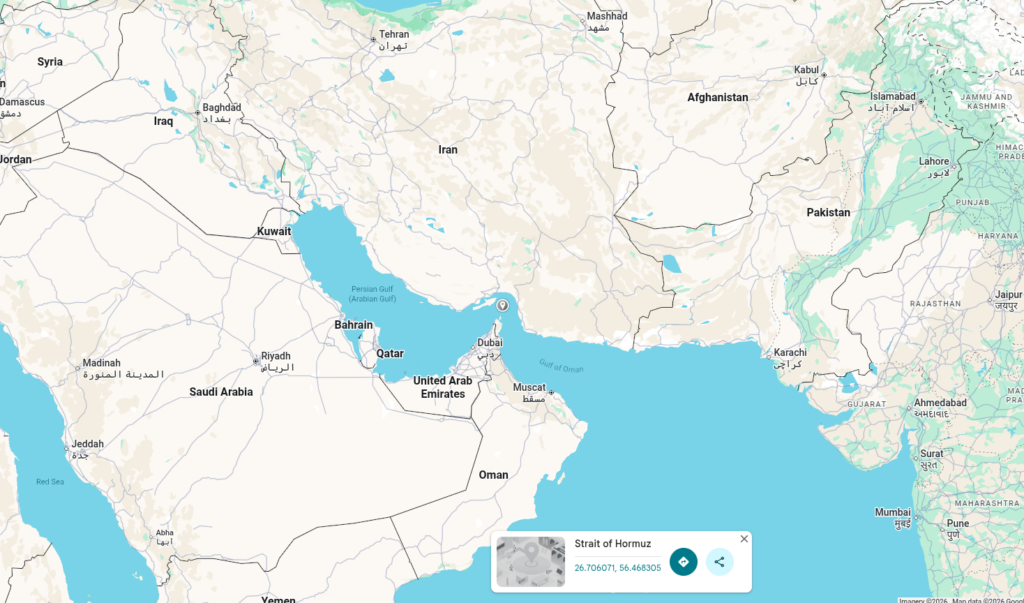
On April 8, the FT published a report titled “Iran demands crypto fees for ships passing Hormuz during ceasefire,” although the report specified Bitcoin, not general cryptocurrency. This report detailed events during the ongoing two-week ceasefire in the conflict between the United States, Israel, and Iran, particularly concerning the Strait of Hormuz. Prior to the conflict, approximately 20% of global oil passed through this strait via tankers, supplying Europe, Asia, and much of the world. As the article indicated, Iran intends to charge a fee for ships transiting Hormuz, a vital geographical bottleneck over which Iran exercises significant control through long-range missiles, underwater mines, and attack drone technology.
The report featured an interview with Hamid Hosseini, a representative for Iran’s Oil, Gas and Petrochemical Products Exporters’ Union. He informed the FT that oil vessels must provide inventory data to Iran and pay a $1 fee per barrel of oil in Bitcoin for secure passage through Hormuz. Hosseini stated, “Once the email arrives and Iran completes its assessment, vessels are given a few seconds to pay in Bitcoin, ensuring they can’t be traced or confiscated due to sanctions.”
This announcement created a stir in the Bitcoin community and garnered international attention, coinciding with a rise in Bitcoin’s price to $73,000 from the high $60,000s. Iran’s decision to request Bitcoin for passage instead of dollars, yuan, or gold signifies a significant acknowledgment of Bitcoin’s superior monetary properties in the contemporary world. It substantiates long-standing theories within the Bitcoin community positing Bitcoin as a neutral medium of exchange, suitable for adversaries and ideal for international commerce.
The reasons are evident. Iran avoids dollars due to extensive U.S. sanctions that have severed its access to Western payment systems. It also eschews the Chinese currency to avoid dependency on another major power and preserve its sovereignty. Gold would necessitate physical transportation or settlement through the banking system, presenting the same sanctions risks as fiat currencies. Even Tether gold is not a viable alternative because a trusted, sanctionable third party holds the underlying assets, a reality that even the most transparent blockchain technology cannot circumvent.
Bitcoin emerges as the only practical payment option for a nation like Iran, currently engaged in conflict. The Bitcoin blockchain functions as a globally interconnected network of nodes designed to resist censorship and, consequently, sanctions, enabling swift and secure digital settlements.
Any Bitcoin acquired by Iran could be secured in multisignature cold storage, a highly secure account requiring multiple keys for withdrawals. This setup allows keys to be distributed globally or across various locations within Iran, making confiscation or destruction of access keys extremely challenging. Iran possesses considerable historical engagement with Bitcoin, having reportedly controlled up to 10% of the total Bitcoin mining capacity at different times, indicating extensive experience in utilizing and safeguarding the asset.
Earlier the same day, before the FT report surfaced, former President Trump commented to ABC, suggesting discussions about a joint venture with Iranian leadership to secure the Strait of Hormuz. He implied a potential collaborative effort to ensure passage, stating, “We’re thinking of doing it as a joint venture. It’s a way of securing it — also securing it from lots of other people.” This indicated a potential dialogue between the U.S. and Iran as peace talks progressed and compromises were explored to re-establish stability in the international oil trade.
This morning, I asked President Trump if he’s okay with the Iranians charging a toll for all ships that go through the Strait of Hormuz, he told me there may be a Joint US-Iran venture to charge tolls:
“We’re thinking of doing it as a joint venture. It’s a way of securing it —…
— Jonathan Karl (@jonkarl) April 8, 2026
The Saudi Arabian authorities promptly issued a statement. Ali Shihabi, a commentator with close ties to the Saudi royal court, conveyed to The Times of India, “Allowing Iran any form of control over the strait would be a red line. The priority has to be unimpeded access through the strait.”
The FT report emerged shortly thereafter, followed by a statement from Trump opposing the toll idea, asserting that Iran “Should not charge fees.” He further added, “There are reports that Iran is charging fees to tankers going through the Hormuz Strait — They better not be and, if they are, they better stop now!”
Will Iran abandon the Hormuz toll, and why might they?
Considering the ongoing conflict and the severe deterioration of international relations between the involved nations, Hormuz represents Iran’s most significant leverage. The Iranian regime has demonstrated resilience despite extensive bombardment of its military infrastructure and numerous assassinations of its leaders. Simultaneously, they continue to display capabilities with long-range weaponry capable of disrupting passage through Hormuz. The cost associated with these long-range weapons is substantially lower than the price of missile interceptors needed to protect oil tankers attempting passage, and in wartime, economic considerations are paramount.
Trump acknowledged this reality during a press conference, noting that a single Iranian with a machine gun could effectively impede safe passage. He told CBS earlier in the month, “Look, problem with the strait, a guy can take a mine, drop it in the water and say, ‘oh, it’s unsafe’… Or you can take a machine gun from the shore and shoot a few bullets at a ship, or maybe an over-the-shoulder missile, small missiles.”
The expense of attacking vessels traversing the strait is considerably less than the cost of defending them. Barring a substantial military escalation, there is remarkably little the United States can militarily do to secure the strait. Theoretically, the U.S. could prevail in a conflict with Iran, but at what potential cost? Perhaps genocide, or deploying ground troops for a full-scale invasion? Ultimately, the U.S. might even resort to using nuclear weapons against Iran, but what would be the repercussions of any of these actions on U.S. international standing, or the upcoming midterms, which Republicans are already anticipated to lose? The political ramifications could be exceedingly high. Furthermore, any subsequent regime in Iran would be aware that they could employ the same Hormuz strategy at any time.
The only enduring resolution to this conflict likely lies in diplomacy, and the leverage Bitcoin provides Iran as a sanction-resistant digital currency for a sovereign nation will undoubtedly influence negotiations. This is especially true if Bitcoin enables Iran to monetize the Hormuz toll.
What lies ahead?
If the Hormuz toll remains in effect and is not resolved through diplomacy or outright war, oil tankers seeking passage will need to acquire Bitcoin valued in the millions of dollars per vessel. However, this presents challenges, as most Western Bitcoin exchanges are sanctioned from engaging in business with Iran. Consequently, shipping companies would need to source Bitcoin from jurisdictions that permit such transactions, likely in the East. They could potentially make fiat payments to an exchange in China or Russia, purchase the Bitcoin, and then transfer it to Iran for the toll. This scenario would boost demand and, consequently, the price of Bitcoin in Eastern markets, thereby increasing mining profitability. This, in turn, could lead to a rebalancing of hashrate distribution, which has become increasingly concentrated in the United States in recent years.
Nations such as China and Japan, significant importers of oil transiting Hormuz, along with European countries, would have a stronger incentive not only to facilitate Bitcoin trade at corporate and national levels but also to acquire mining hardware. This would represent the only reliable method to ensure their transactions are processed.
Should the United States opt to intervene, it might attempt to pressure major Bitcoin miners to censor transactions related to the Iranian toll. However, this effort would likely fail as long as sufficient Eastern hashrate exists, and the economic incentives in this particular situation appear to favor the East.
Editorial Disclaimer: We utilize AI in our editorial process, assisting with research, content generation, and quality assurance. Our editorial team oversees, reviews, and approves all content, ensuring accuracy and integrity. AI-generated visuals are created using tools trained on properly licensed materials. In Bitcoin, as in media: Don’t trust. Verify.
Source: : bitcoinmagazine.com