
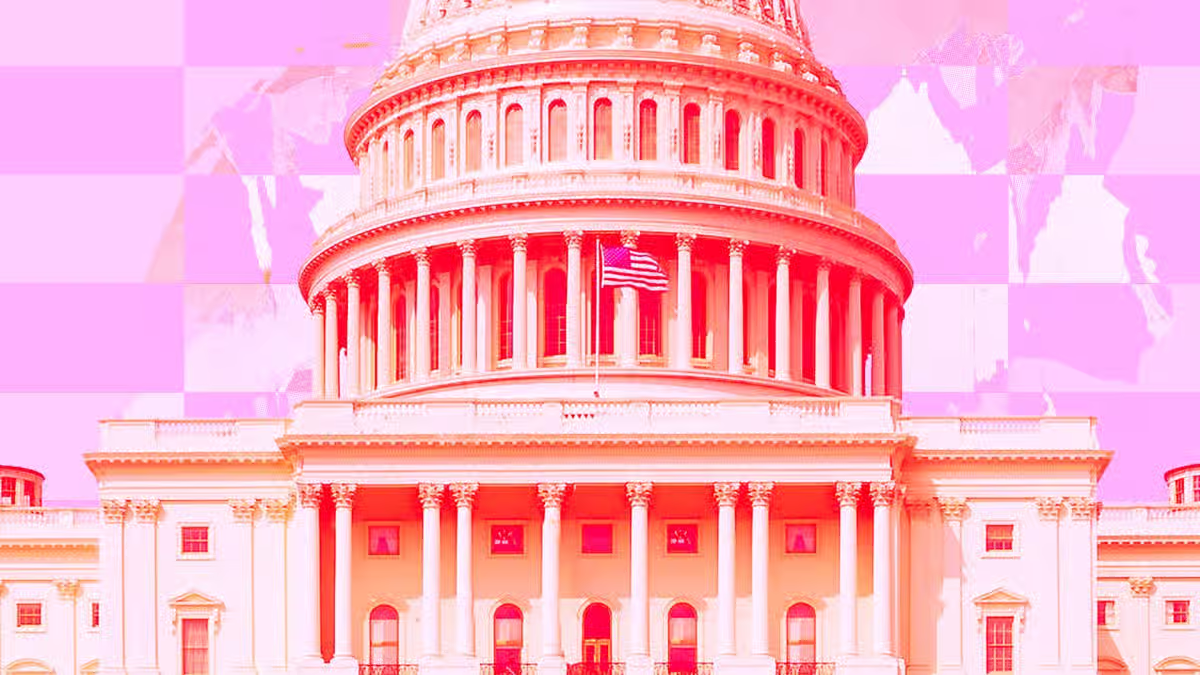
Lawmakers in the United States have reached an agreement on comprehensive housing legislation that critically includes a prohibition on the development and issuance of a central bank digital currency (CBDC) until the end of 2030. The “21st Century ROAD to Housing Act,” a product of bipartisan collaboration between the Senate and the House of Representatives, was unveiled by key figures including Senators Tim Scott and Elizabeth Warren, and Representatives French Hill and Maxine Waters.
While primarily focused on addressing housing affordability by increasing supply and regulating corporate landlord practices, the inclusion of the CBDC ban demonstrates a strategic legislative approach to advance unrelated policy objectives by attaching them to essential bills. This specific provision was reportedly a point of emphasis for House Republicans.
Key Takeaways
- The “21st Century ROAD to Housing Act” has secured bipartisan agreement in both the U.S. Senate and House of Representatives.
- A significant component of the act is a ban on the Federal Reserve issuing or creating a CBDC or any substantially similar digital asset until December 31, 2030.
- This anti-CBDC measure, while seemingly unrelated to housing policy, reflects a common legislative tactic of linking distinct proposals to high-priority legislation.
- The current U.S. administration has expressed a firm stance against CBDCs, prioritizing other digital asset legislation.
- The bill is scheduled for procedural votes in the Senate and subsequently the House, with potential presidential sign-off following legislative passage.
The legislative text explicitly restricts the Federal Reserve from “issuing or creating a central bank digital currency or any digital asset that is substantially similar to a central bank digital currency” through the sunset date of December 31, 2030. This move underscores a cautious approach from certain legislative factions towards the concept of a U.S. CBDC, despite ongoing global exploration of such technologies.
The current U.S. administration’s position, as reiterated by Treasury Secretary Scott Bessent, indicates a clear disinterest in pursuing a CBDC, with the focus directed towards advancing other digital asset-related frameworks, such as the “Clarity Act.” This aligns with the legislative sentiment expressed in the housing bill.
The legislative process for the “21st Century ROAD to Housing Act” is advancing, with a procedural vote slated for the Senate. Following Senate approval, the bill is expected to proceed swiftly to the House for a vote shortly after the upcoming recess, paving the way for potential enactment.
Regulatory Precedent and the Legal Stakes
The inclusion of a CBDC ban within a housing bill, while unconventional, establishes a significant precedent for how non-monetary policy issues can be integrated into broader financial regulatory discussions. The legal stakes for companies and financial institutions considering or developing technologies that could be construed as CBDC-adjacent are substantial. This legislation signals a clear legislative intent to limit the scope and timeline for any potential U.S. CBDC development, creating a period of regulatory certainty—or more accurately, regulatory prohibition—for the next six years.
From a global regulatory perspective, this U.S. legislative action adds another layer to the diverse approaches countries are taking towards digital currencies. While jurisdictions like the European Union are progressing with their frameworks, such as MiCA (Markets in Crypto-Assets Regulation), and others are actively piloting CBDCs, the U.S. is signaling a pause, driven by legislative rather than solely executive or central bank decision-making. This could influence international dialogues on CBDC standards and interoperability, particularly if other nations perceive this as a significant market opting out of a potentially dominant future financial technology.
Information compiled from materials : www.theblock.co