
 Prefer us on Google
  Download App
  Download App
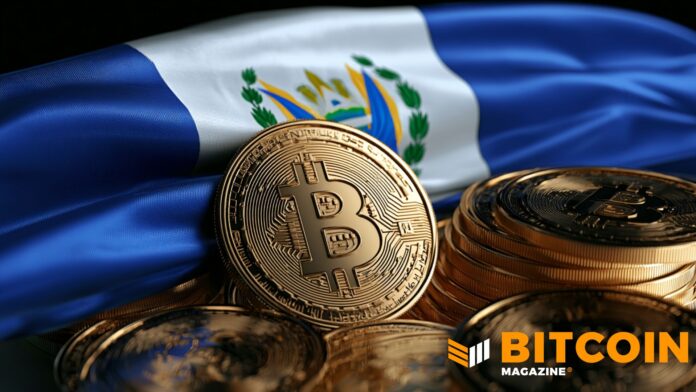
Yesterday marked the fifth anniversary of El Salvador’s Congress approving the pioneering Bitcoin Law by a vote of 62 to 22, establishing the small Central American country as the first nation globally to recognize bitcoin as legal tender.
The date was June 8, 2021. Half a decade on, the government possesses 7,677 BTC, valued at approximately $480 million, and continues its accumulation strategy.
Since President Nayib Bukele declared a policy of acquiring one bitcoin daily in November 2022, the country has implemented a dollar-cost averaging approach. Over the past 12 months, ending June 2025, El Salvador expanded its bitcoin holdings by more than 1,600 BTC, notably acquiring over 1,000 BTC in a single week during a market downturn in November.
At the beginning of 2026, the Bitcoin Office announced the nation’s commitment to going “all in” on both bitcoin and artificial intelligence.
This firm stance has persisted despite a significant policy shift. In January 2025, Bukele’s administration revoked bitcoin’s mandatory legal tender status as a prerequisite for a $1.4 billion IMF loan package. Consequently, businesses are no longer legally obligated to accept it, and the government-developed Chivo wallet, central to Bukele’s initial proposal, is being gradually retired.
However, the government has not divested any assets from its bitcoin reserves, and individuals can still opt to use BTC as a medium of exchange.
5 years ago, El Salvador passed the first 'Bitcoin Law' that regulated BTC as legal tender 🇸🇻
Today, they now own 7,677 BTC worth $480 million. pic.twitter.com/RA7HUmwLvO
— Bitcoin Magazine (@BitcoinMagazine) June 9, 2026
El Salvador: No taxes on bitcoin
El Salvador imposes no capital gains tax on bitcoin or other cryptocurrency dealings, a policy the government reinforced in early 2026 to attract international investment. Furthermore, the country is devising plans for a “Volcano Bond” collateralized by bitcoin and a proposed Bitcoin City, powered by geothermal energy.
The scenario involving remittances, which President Bukele used to advocate for the law’s adoption, has not yet materialized on a large scale. El Salvador’s economy is heavily reliant on remittances, with personal transfers from abroad accounting for approximately 24 percent of its GDP. In the first quarter of 2026, these transfers amounted to $2.43 billion. Crypto represented only $17.38 million of this total, or 0.71 percent.
Original article : bitcoinmagazine.com