

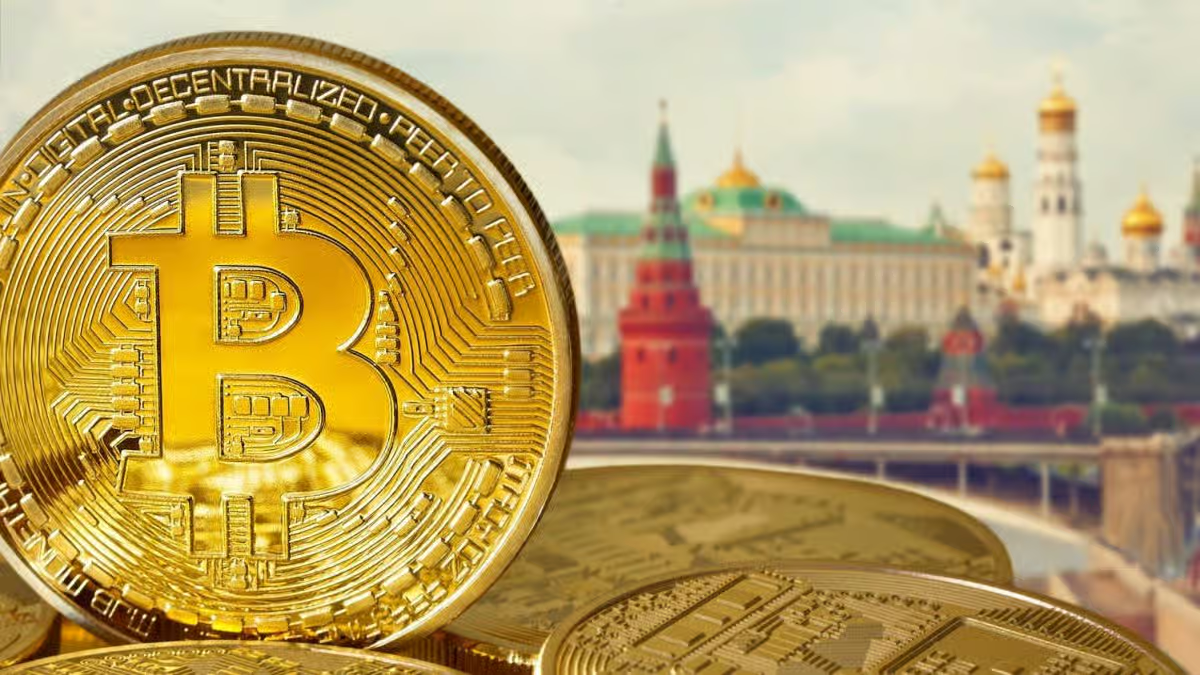
The European Commission has put forth its 21st sanctions package against Russia, which includes a significant expansion of restrictions on crypto platforms facilitating sanctions evasion. This move signals a concerted effort by the European Union to close potential loopholes that allow Russian entities and individuals to circumvent international financial restrictions.
Key Takeaways
- The European Commission’s 21st sanctions package against Russia includes enhanced crypto-related measures.
- The proposed sanctions aim to extend transaction bans to additional non-EU entities, including crypto platforms aiding Russia.
- A potential country-level ban on crypto services from non-EU jurisdictions hosting sanction-evading platforms is being considered.
- These measures are designed to deter countries that enable Russia to bypass existing sanctions.
- The EU’s actions come amid concerns over the growing volume of illicit crypto transactions, with Russia-linked activity being a notable component.
As part of the latest sanctions initiative, the European Commission intends to broaden transaction bans to encompass approximately 20 non-EU entities. These entities include banks, crypto platforms, and oil traders that have been identified as servicing sanctioned Russian entities and individuals. Ursula von der Leyen, President of the European Commission, stated that the commission might introduce, for the first time, a comprehensive country-level ban on crypto services originating from non-EU countries that host platforms aiding Russia in evading sanctions. This measure is intended to serve as a strong deterrent to such jurisdictions.
Potential Regulatory Precedent
This proposed policy by the European Commission could set a significant regulatory precedent for global crypto governance. By considering a country-level ban on crypto services based on a jurisdiction’s perceived complicity in sanctions evasion, the EU is signaling a willingness to exert extraterritorial influence over crypto-related financial flows. This approach moves beyond targeting individual entities or transactions and instead places responsibility on entire non-EU countries if their regulatory environments are seen as enabling sanctioned actors. Such a move could pressure countries to enhance their anti-money laundering (AML) and counter-terrorist financing (CTF) frameworks, particularly concerning crypto assets, to avoid being isolated from the EU’s financial system. The legal stakes for companies operating in or facilitating services to these non-EU jurisdictions could become considerably higher, potentially forcing them to cease operations or significantly alter their compliance strategies to avoid being deemed complicit.
The development follows earlier reports that the EU was considering a broad prohibition on crypto transactions with Russian entities. This latest package also addresses concerns highlighted by blockchain analytics firms, which have observed a substantial increase in the total value of illicit crypto transactions. Chainalysis data indicated that Russia-linked transactions formed a considerable portion of state-linked crypto activity. Furthermore, previous research by Elliptic identified specific crypto exchanges that allegedly facilitated Russia’s sanctions evasion by offering financial channels outside traditional banking oversight. Regulatory actions have already been taken, with the UK’s Financial Conduct Authority sanctioning HTX (formerly Huobi Global) for its alleged support of the Russian government. Meanwhile, Russia is reportedly preparing its own comprehensive crypto regulatory framework, expected in July, which aims to establish licensed domestic trading platforms.
In addition to crypto-specific measures, the 21st sanctions package is designed to impose further restrictions on Russia’s energy and trade sectors. This includes targeting oil vessels and, for the first time, blacklisting Russian fisheries. According to President von der Leyen, these ongoing sanctions are designed to “keep biting hard and cutting deep,” thereby weakening the economic underpinnings of Russia’s ongoing military actions.
Based on materials from : www.theblock.co