

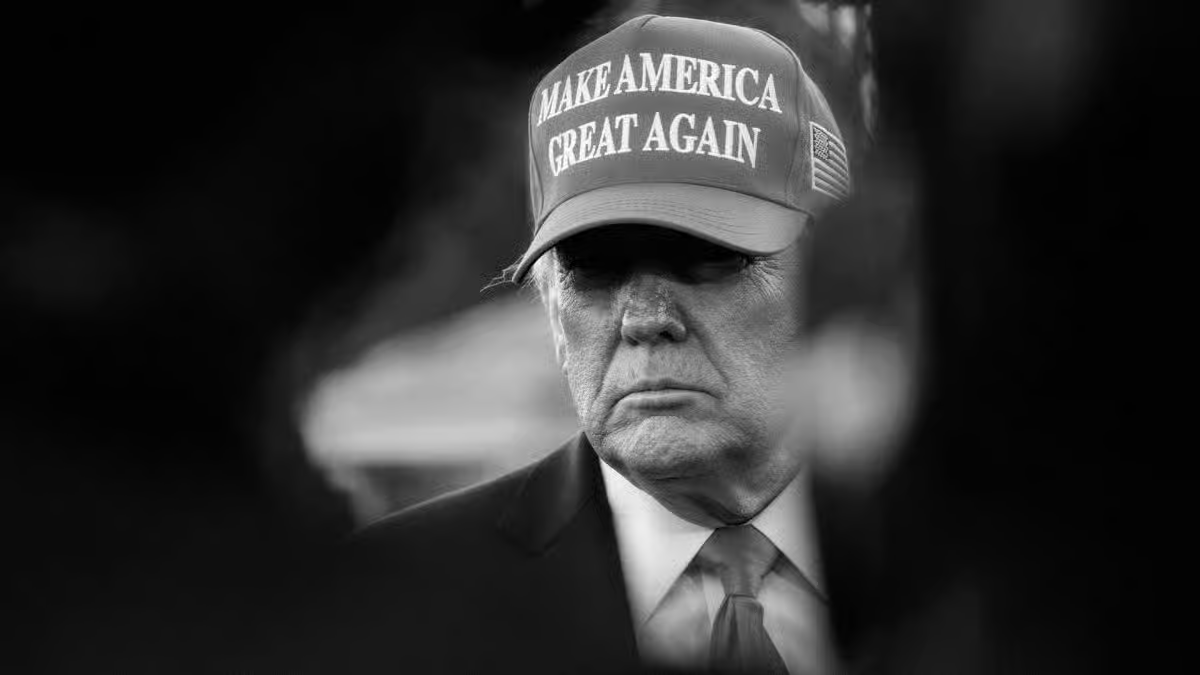
The advancement of landmark legislation intended to regulate the cryptocurrency industry is facing significant political hurdles, with potential implications for institutional investment and the sector’s overall legal framework. The Clarity Act, which aims to establish comprehensive rules for digital assets, is currently awaiting a Senate vote. However, debate surrounding the inclusion of ethics provisions, specifically restricting elected officials and their families from engaging in digital asset ventures, has intensified. This controversy is largely fueled by President Donald Trump’s substantial personal interests in the cryptocurrency space, raising concerns among lawmakers and potentially jeopardizing the bill’s passage.
Key Takeaways
- The Clarity Act, a comprehensive regulatory bill for digital assets, is facing delays due to ethical considerations.
- President Trump’s significant financial involvement in cryptocurrency projects has become a central point of contention.
- Democrats are pushing for ethics provisions to be included in the Clarity Act, restricting officials’ digital asset transactions.
- Some industry observers and lawmakers believe Trump’s personal interests are complicating the legislative process and may lead to the bill’s failure.
- The outcome of the Clarity Act could set a precedent for how personal financial interests intersect with cryptocurrency regulation.
While President Trump’s public stance has been broadly supportive of the digital asset industry, viewing it as a pathway to innovation and economic opportunity, his personal financial gains from crypto-related ventures have drawn scrutiny. Reports estimate that Trump and his family have accumulated at least $1.4 billion from such projects since his inauguration. This direct financial benefit is now a focal point for ethical debates on Capitol Hill. The inclusion of ethics provisions in the Clarity Act has become a condition for some Democrats to support the bill, creating a complex legislative challenge.
Industry sources have expressed reluctance to publicly comment on how Trump’s personal crypto interests might be affecting the Clarity Act’s progress, citing political sensitivities. Mark Hays, a senior policy analyst at Americans for Financial Reform, noted that industry participants may be hesitant to criticize actions that could be perceived as beneficial to the sector, even if ethically questionable. He observed that even staunch supporters of both crypto and Trump acknowledge the optics are unfavorable as Congress deliberates on the Clarity Act.
The regulatory landscape is evolving, with agencies like the Commodity Futures Trading Commission (CFTC) and the Securities and Exchange Commission (SEC) making strides in clarifying their positions on digital assets. However, these agency actions lack the permanence and comprehensive scope that federal legislation like the Clarity Act aims to provide. Reeve Collins, co-founder of WeFi, commented that while current regulatory trends are favorable, the turmoil surrounding President Trump’s involvement could be slowing down the legislative momentum for the Clarity Act.
Potential Regulatory Precedent
The debate over including ethics provisions in the Clarity Act, driven by President Trump’s cryptocurrency dealings, has the potential to establish a significant regulatory precedent. If ethics restrictions are successfully incorporated into the final legislation, it could signal a new era where personal financial entanglements of public officials in emerging asset classes are subject to stringent oversight. This could influence future legislative efforts concerning other rapidly developing industries, setting a high bar for transparency and conflict-of-interest standards. Conversely, if the Clarity Act passes without such provisions, it might be interpreted as a tacit acceptance of potential conflicts, empowering officials to pursue personal financial opportunities in regulated sectors with fewer restrictions. The outcome will likely shape how lawmakers approach similar situations in the future, impacting both the digital asset industry and the broader regulatory environment for public servants.
On Capitol Hill, a notable push from Democrats, particularly within the Senate Banking Committee, is for the Clarity Act to incorporate language that would prohibit federal officials, including the President and Vice President, from engaging in certain digital asset transactions. This demand was highlighted during the committee’s advancement of its version of the bill. Senators Angela Alsobrooks and Ruben Gallego voted in favor of advancing the bill but insisted on the inclusion of these ethics provisions. Senator Alsobrooks stated her insistence on an ethics agreement that would apply broadly to all federal officials to ensure bipartisan support and uphold public trust.
The Clarity Act, as envisioned, seeks to provide the first federal regulatory framework for the cryptocurrency industry, defining disclosure requirements and dividing oversight responsibilities between the CFTC and the SEC. Initial prospects for the bill’s passage appeared strong, given bipartisan support in the House and a pro-crypto administration. However, the absence of significant ethics language in the House version has become a critical point of contention.
President Trump recently took to social media, vowing to establish a “FUTURE-PROOF Digital Asset Market Structure that cannot be undone by the Crypto Haters.” In response, White House spokesperson Davis Ingle reiterated the administration’s commitment to making the U.S. the global leader in crypto through innovation and supportive policies. The Senate Banking Committee, under Chairman Tim Scott, has publicly aligned with President Trump’s stance, emphasizing the Clarity Act’s role in providing clear rules and protecting consumers.
When questioned about ethics, Senator Scott acknowledged its importance but noted it falls outside the direct jurisdiction of the banking committee. Meanwhile, Senator Elizabeth Warren, a vocal critic of both Trump’s crypto interests and the industry, has stressed the need for a robust bill that does not unduly benefit the President. A Senate Democratic spokesperson suggested that any bill lacking safeguards against federal officials profiting from crypto would undermine the industry’s legitimacy. Conversely, some sources familiar with negotiations suggest that Republican adherence to President Trump might prevent a compromise on ethics, potentially dooming the Clarity Act’s chances.
Nic Puckrin, CEO at CoinBureau, expressed doubt that enough Democratic senators would support the bill without ethics provisions, particularly concerning President Trump’s involvement. This sentiment is echoed by some within the crypto community who view the ethics debate as a political maneuver by Democrats rather than a core crypto industry issue. They argue that such provisions are not integral to market structure legislation and that Democrats might be leveraging the situation for political gain while appearing pro-business.
The potential failure of the Clarity Act is also being attributed to broader Senate procedures, where the Senate often revises House-passed legislation. This has led to frustrations and concerns within the crypto industry about the politicization of regulatory efforts. A research note from Jaret Seiberg of TD Cowen’s Washington Research Group indicated that the Clarity Act’s prospects are diminishing due to the deteriorating political environment, including developments related to audits of President Trump’s tax returns and investigative reports concerning lobbying efforts with the CFTC. Seiberg concluded that these factors make it politically difficult for Democrats to support a crypto bill without stringent conflict-of-interest standards applicable to the President.
According to the portal: www.theblock.co