


The path for the CLARITY Act, a proposed piece of legislation aimed at regulating stablecoins, has just become significantly more challenging. JPMorgan Chase CEO Jamie Dimon publicly stated on Friday that his institution, along with other major banks, intends to vigorously oppose the bill in its current form. This opposition stems from key disagreements over stablecoin rewards and what Dimon perceives as inadequate legal protections for consumers and the financial system.
Key Takeaways
- JPMorgan Chase CEO Jamie Dimon announced banks will oppose the CLARITY Act.
- Concerns cited include stablecoin rewards and insufficient AML/Bank Secrecy Act protections.
- Banks fear stablecoin rewards could lead to deposit flight.
- The CLARITY Act passed the Senate Banking Committee but faces an uncertain future before a full Senate vote.
- The legislative window for passage is narrowing due to upcoming recess and elections.
Dimon’s remarks, reported by The Block, indicate a strong stance against the CLARITY Act, with banks signaling they “will not accept it” as it stands. The core of the dispute centers on the bill’s provisions allowing crypto firms to offer rewards on stablecoin holdings without adhering to the same stringent regulatory standards as traditional banks. Furthermore, Dimon highlighted concerns regarding the bill’s effectiveness in meeting Anti-Money Laundering (AML) and Bank Secrecy Act (BSA) requirements, critical components for financial system integrity.
The contentious issue of stablecoin rewards remains a significant point of friction. Traditional banks argue that allowing crypto companies to offer yield on stablecoin deposits could incentivize a rapid outflow of funds from their own deposit bases, creating systemic risk. Conversely, the crypto industry contends that they should have the flexibility to reward users for holding stablecoins without being subjected to the full regulatory burden of being classified as banks.
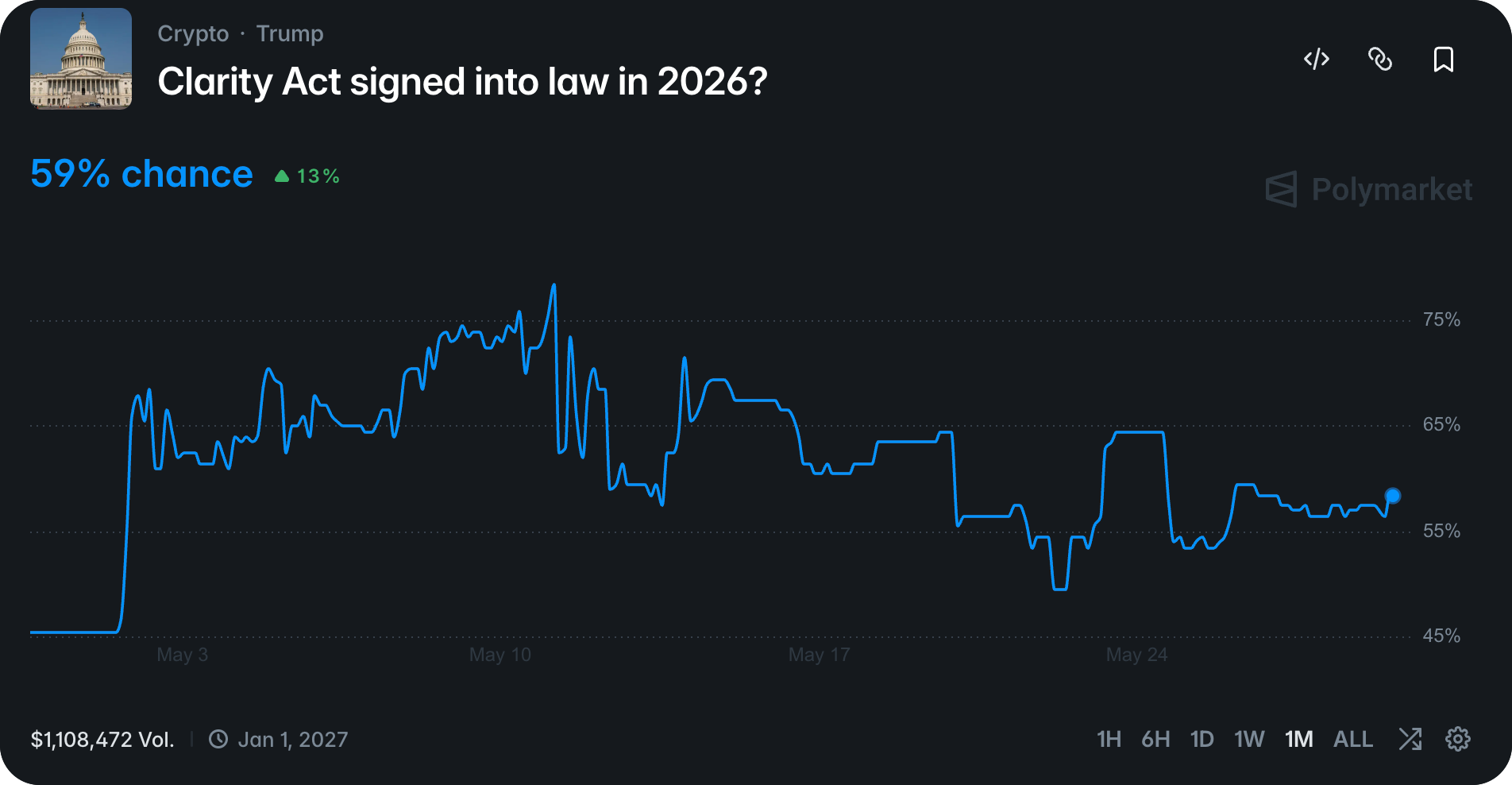
While the CLARITY Act did manage to clear the Senate Banking Committee on May 14 with a 15-9 vote—largely along party lines with all Republicans and two Democrats in favor—its journey to the Senate floor for a vote is far from guaranteed. The legislative clock is ticking, with the upcoming summer recess and the 2026 midterm elections creating a shrinking window of opportunity for the bill to be passed into law. The anticipated lobbying efforts by banks directly targeting senators are expected to intensify, adding another layer of difficulty for the CLARITY Act’s proponents.
Information compiled from materials : www.bankless.com