

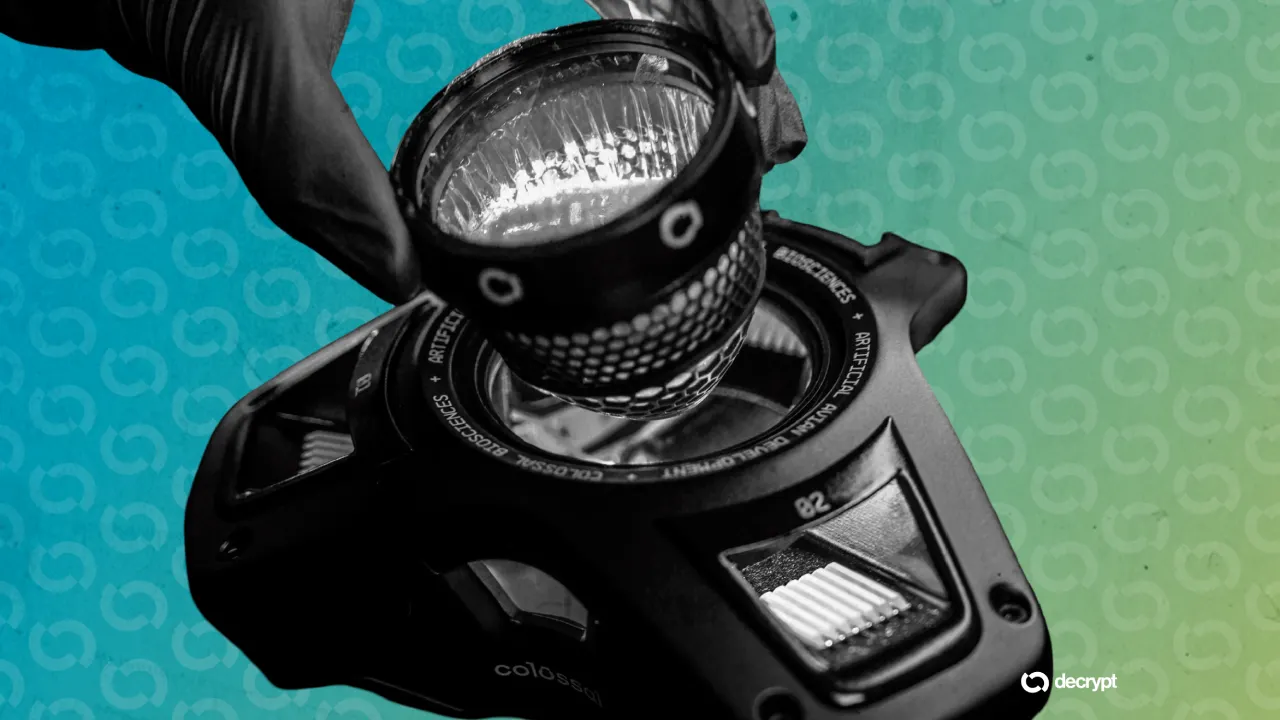
Biotechnology firm Colossal Biosciences has announced significant progress in its development of an artificial womb system, a technology that could revolutionize reproductive biology and conservation efforts. The company claims its ex-utero development platform is nearing completion, having achieved a 100% development rate in current trials. This advanced system aims to replicate the full gestational process for mammals outside a biological uterus.
Key Takeaways
- Colossal Biosciences reports its artificial womb platform has achieved a 100% development rate in ongoing tests.
- The primary remaining challenge lies in accurately reproducing the complex chemical signaling between early developmental stages.
- While a major technological advancement, the artificial womb is not presently slated for Colossal’s late 2028 woolly mammoth revival project.
- The technology utilizes a combination of advanced hardware, AI-driven software for real-time monitoring, and a nutrient/gas exchange system inspired by dialysis.
- Colossal intends to leverage its innovations for endangered species conservation and aims to open-source its related technologies.
The Dallas-based company detailed its progress, highlighting that the system’s core hardware and software architecture have been successfully established. The final hurdle involves replicating the intricate chemical cues that guide embryonic and fetal development. CEO Ben Lamm described the current stage as being “on the one-yard line,” underscoring the proximity to a fully functional system.
The artificial womb, also known as an ectogenesis system, is engineered to provide a life-sustaining environment by delivering essential nutrients, oxygen, and hormones while managing waste products. Unlike previous research focusing on supporting premature births, Colossal’s platform is designed for complete gestation, from initial embryonic stages through to delivery.
This technology is a product of Colossal Biosciences’ Australian laboratory, led by Chief Biology Officer Andrew Pask. The system integrates a dialysis-like mechanism with sophisticated AI models and proprietary algorithms. These tools continuously monitor embryo development, dynamically adjusting the biochemical and gaseous environment to match natural biological patterns. This precise control is crucial for ensuring healthy development and accurate morphological patterning.
To validate the platform, Colossal utilized the fat-tailed dunnart, a small Australian marsupial with a notably short 13-day gestation period. The company reported success in guiding dunnart embryos through all three major developmental phases. Advanced AI and physiological monitoring were employed to ensure the development within the artificial womb closely mirrored that of an embryo within a natural uterus. Chief Biology Officer Andrew Pask noted that while around 25% of fertilized eggs naturally fail, their system achieved a 100% development rate in optimized trials, with 26 embryos successfully developing to term.
Despite this significant breakthrough, Colossal has clarified that the artificial womb is not an immediate component of their ambitious plan to bring a woolly mammoth calf into existence by late 2028. This stance adjusts earlier discussions that posited the artificial womb as a potential alternative to using endangered Asian elephants as surrogate mothers.
Colossal has been actively expanding its reproductive engineering capabilities. In April 2025, the company announced the birth of three cloned dire wolf pups, utilizing ancient DNA integrated into gray wolf cells. This was preceded by an announcement in November of the cloning of a dog belonging to NFL star Tom Brady, demonstrating the versatility of their non-invasive cloning technology.
Colossal Biosciences® (@colossal) May 20, 2026
The company asserts full intellectual property rights over its artificial womb technology. Colossal also emphasizes the ethical framework surrounding its projects, positing that controlled ex-utero development could potentially enhance survival rates compared to conventional breeding methods. Furthermore, the firm suggests that the advancements in artificial womb technology could extend far beyond de-extinction, offering substantial benefits to conservation biology and broader reproductive medicine applications. A company spokesperson stated, “Our goal is to leverage our technologies to help save endangered species, and we open source all of our technologies for conservation.”
Long-Term Technological Impact on Web3 and Beyond
The development of sophisticated artificial womb technology by Colossal Biosciences, while rooted in biology, carries implications that resonate with the principles driving innovation in blockchain, AI, and Web3. The core of Colossal’s achievement lies in the precise, real-time control and monitoring of complex biological processes, mediated by AI and sophisticated data analysis. This mirrors the advancements needed in Layer 2 scaling solutions, where efficient data processing and state management are paramount. The AI’s role in dynamically adjusting environmental factors within the artificial womb can be seen as analogous to smart contract optimization on decentralized networks, ensuring peak performance and resource allocation. Furthermore, the potential for open-sourcing this technology for conservation aligns with the decentralized and collaborative ethos of Web3, where shared resources and transparent protocols can accelerate collective progress. The meticulous, iterative development process, focusing on overcoming specific technical hurdles like chemical signaling, reflects the ongoing challenges and solutions being explored in blockchain interoperability and the development of robust decentralized applications (dApps). As these fields mature, the convergence of advanced AI, biological engineering, and decentralized systems may unlock unprecedented capabilities, from personalized medicine to more sustainable ecological management, all potentially governed and tracked on secure, transparent blockchain ledgers.
Original article : decrypt.co