

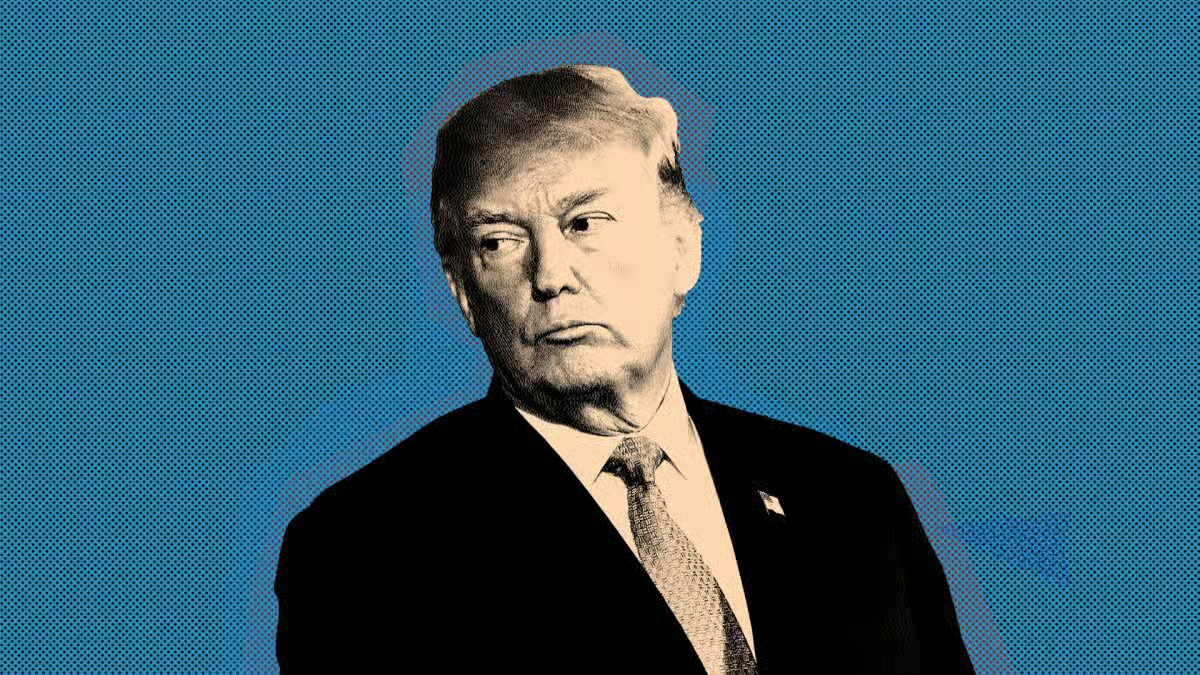
The path for the cryptocurrency market structure bill, commonly referred to as the Clarity Act, to become law this year is diminishing due to an increasingly complex political landscape, according to an analysis by investment bank TD Cowen. Jaret Seiberg, managing director at TD Cowen’s Washington Research Group, indicated in a recent note that the political environment surrounding the legislation is deteriorating, making its passage before the end of the year improbable.
Key Takeaways
- The political climate has become more challenging for the Clarity Act, according to TD Cowen.
- Recent controversies involving former President Donald Trump are complicating Democratic support for the bill without specific conflict-of-interest provisions.
- The bill’s progress faces significant hurdles, including potential opposition to amendments targeting presidential conduct.
- The window for legislative action is narrowing, with the upcoming midterm elections potentially pushing final decisions to future legislative sessions.
Despite advancing through the Senate Banking Committee earlier this month, the bill faces substantial opposition, particularly from Democrats and certain banking entities. Seiberg had previously characterized the committee vote as a shift of the debate to the full Senate rather than an indication of consensus, with conflict-of-interest provisions remaining a significant point of contention.
Recent developments concerning former President Donald Trump and his administration are reportedly increasing the political difficulty for Democrats to lend their support to the crypto bill. Seiberg highlighted a settled legal case between Trump and the Internal Revenue Service (IRS), which established a substantial fund intended to compensate individuals alleging mistreatment by government agencies. This settlement also prohibits the IRS from auditing past tax returns of Trump, his family, and associated companies. Seiberg commented that such a taxpayer-funded fund, seemingly designed to benefit supporters, sets a potentially problematic precedent for future presidential administrations.
Potential Regulatory Precedent and Shifting Alliances
Further complicating matters, a New York Times report investigated allegations of undue influence from prediction markets and cryptocurrency interests on the Commodity Futures Trading Commission (CFTC). The report suggested that experienced regulators might have been sidelined to foster a more favorable environment for these sectors within the agency. While CFTC Chair Michael Selig has reportedly denied these allegations, stating the agency’s focus is on significant misconduct, the reported ties between the Trump family and certain crypto and prediction market businesses are becoming a focal point in congressional deliberations.
Adding to the scrutiny are financial disclosures revealing a large volume of stock trades executed on Trump’s behalf during the first quarter of 2026. Seiberg noted that some of these trades appeared to coincide with periods when Trump publicly discussed companies or policies that could impact their markets. The White House has maintained that these trades were conducted without direct involvement from Trump or his family.
According to Seiberg’s analysis, these cumulative events are intensifying pressure on Democrats to insist on the inclusion of stringent conflict-of-interest provisions within the crypto bill. This stance makes it politically challenging for Democrats to endorse the legislation unless it incorporates standards of conduct applicable to the President. Concurrently, these circumstances pose a dilemma for Republicans, who may be reluctant to advance the bill if it necessitates voting against amendments designed to address presidential conflicts of interest.
The result, Seiberg anticipates, is a potential delay in legislative action as lawmakers await a potential abatement of these political controversies. However, the approaching midterm elections provide a limited timeframe for resolution, suggesting that significant legislative progress may be deferred to future sessions, possibly extending into 2027, with the full implementation of any new rules potentially not occurring until 2029.
Information compiled from materials : www.theblock.co