

 Prefer us on Google
  Download App
  Download App
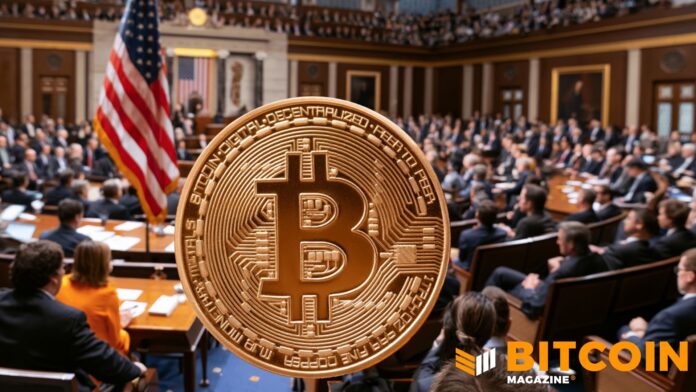
The Senate Banking Committee has advanced the Digital Asset Market Clarity Act with a 15–9 vote on Thursday. Senators Ruben Gallego (D‑Ariz.) and Angela Alsobrooks (D‑Md.) joined all 13 Republicans in supporting the comprehensive crypto market structure bill, propelling it toward consideration by the full Senate.
This Clarity Act represents the Senate’s initiative to establish a federal framework for digital asset trading, stablecoins, and intermediaries. It designates shared oversight responsibilities between the SEC and CFTC, along with establishing registration, disclosure, and compliance mandates for exchanges, brokers, and custodians. The bill now proceeds alongside a related proposal from the Senate Agriculture Committee, with the expectation that these two measures will be integrated before a floor vote.
Committee Chair Tim Scott (R‑S.C.) characterized the markup as a pivotal moment, addressing what he described as a “regulatory gray zone” where crypto firms have operated under “outdated rules” for years.
He stated the legislation’s objective is to safeguard consumers, retain innovation within the United States, and “close the avenues that criminals, terrorists, and hostile regimes have sought to exploit.” This follows several months of bipartisan discussions that led to a significant expansion of the draft, adding over 200 pages.
Senator Cynthia Lummis (R‑Wyo.), who chairs the committee’s digital assets panel, referred to the Clarity Act as “the most challenging piece of legislation” she has encountered throughout her extensive career in state and federal government. She described it as a “case of first impression,” attempting to adapt novel asset types and software to a regulatory system originally designed for older markets.
BREAKING: 🇺🇸 Senate Banking Committee PASSES the Clarity Act in 15-9 vote.
The bill now goes to the full Senate. pic.twitter.com/TCs6T283y2
— Bitcoin Magazine (@BitcoinMagazine) May 14, 2026
Warren’s camp: “industry‑written” and “not ready”
Ranking Member Elizabeth Warren (D‑Mass.) spearheaded the opposition, asserting that the committee should prioritize issues such as grocery prices, healthcare expenses, and credit card interest rates, rather than focusing on “a bill drafted by the crypto industry for the crypto industry.”
Warren expressed concern that the draft would “create a significant gap” in the securities laws that have protected investors since 1929, override state-level anti-fraud regulations, and permit banks to accumulate substantial exposure to volatile cryptocurrencies in a manner reminiscent of pre-2008 practices.
She contended that the bill essentially “opens the door to defrauding American consumers who engage with crypto,” and accused Republicans of advancing a framework that facilitates “the President of the United States’ crypto scheme.”
Senator Raphael Warnock (D‑Ga.) linked his dissenting vote to ethical considerations, labeling President Donald Trump’s business associations in the digital asset space as “utter corruption” and criticizing Republicans for not supporting enforceable conflict-of-interest regulations for all elected officials, including the president and vice president.
Illicit finance, mixers and stablecoins
National security considerations prompted a series of Democratic amendments, which were defeated by Republican votes in 11–13 tallies. Warren proposed enhanced sanctioning tools targeting crypto mixers and DeFi services, referencing the Treasury’s 2022 designation of Tornado Cash and highlighting that the bill does not explicitly categorize mixers as illicit entities within the statute.
Senator John Kennedy (R‑La.) questioned why existing anti-money-laundering provisions do not already encompass these services, subsequently joining Republicans in rejecting the proposal.
Senator Jack Reed (D‑R.I.) illustrated how Iranian entities utilize stablecoins to procure drone components, import restricted goods, and collect fees from tankers transiting the Strait of Hormuz. He noted that the Treasury still needs to solicit voluntary cooperation from issuers like Tether, and sought explicit regulatory authority to obstruct illicit foreign stablecoin flows; his amendment also failed along the same party-line division.
Senator Chris Van Hollen (D‑Md.) cited estimates suggesting that over $150 billion in digital assets were channeled through wallets linked to illicit activities last year and pointed to a major North Korean exchange hack where DeFi services were instrumental in laundering funds.
His proposal to criminalize the launch of a DeFi protocol with the explicit intention of facilitating money laundering, sanctions evasion, or terror financing also failed in an 11–13 vote, as Republicans argued that current criminal statutes adequately address such conduct.
Republicans, spearheaded by Lummis and Senator Bernie Moreno (R‑Ohio), countered that Titles II and III of the bill already integrate digital asset intermediaries into the Bank Secrecy Act, expand the Treasury’s “special measures” authority, and subject kiosks, brokers, and exchanges to more defined federal oversight compared to the House’s version.
President Trump, World Liberty and failed ethics amendments
Ethics provisions connected to Trump’s business relationships with World Liberty Financial and various other crypto enterprises generated some of the most intense debates. Van Hollen introduced an amendment to prohibit the president, vice president, and members of Congress from having business ties with crypto firms and to mandate increased disclosure, arguing it was necessary due to the involvement of “the president and members of his family” in “corrupt crypto ventures and various crypto scams.”
Moreno asserted that the measure was more appropriate for the Judiciary Committee due to its criminal penalties and defended Trump as “a decent man,” accusing Van Hollen of alleging criminal behavior without a court conviction. The amendment was defeated 11–13.
Warren attempted to compel banking regulators to release confidential supervisory records pertaining to Jeffrey Epstein, suggesting that Epstein had supported early crypto investments and that examination files could reveal the extent of banks’ and supervisors’ knowledge as he moved funds through major financial institutions. Lummis responded that confidential supervisory materials fall outside the purview of a market structure bill, and that amendment also failed, despite Senator Kennedy noting he would have supported it absent “co-conspirator” language.
DeFi safe harbor deal exposes Democratic split
One of the most significant votes concerned Lummis Amendment 122, a technical adjustment negotiated with Senator Mark Warner (D‑Va.) that clarifies the conditions under which a DeFi protocol is considered controlled by a small group and its interaction with the bill’s primary safe harbors.
Warren argued that the amendment establishes “a restrictive criterion” for identifying crypto intermediaries and incorporates a Section 604 “exemption” that shields decentralized services from fundamental anti-money-laundering regulations, stating that “it makes no difference if rules exist if no one is obligated to adhere to them.”
Following a brief technical revision to remove two lines, the committee approved the amendment with an 18–6 vote, with Warner, Cortez Masto, and Alsobrooks joining the Republicans. This vote clearly highlighted a division: Warren, Reed, and Van Hollen opposed the compromise, while a bloc of “crypto Democrats” accepted the DeFi framework as a foundation for refinement before floor debate.
Process fight over which amendments get heard
The markup also became a test of Scott’s authority over the amendment selection process. Prior to the hearing, he deemed over a dozen proposals inadmissible on grounds of drafting and filing errors, including a proposal supported by the National Sheriffs Association from Senator Catherine Cortez Masto (D‑Nev.) regarding enforcement for decentralized platforms, and a stablecoin-yield adjustment favored by community banks, proposed by Reed and Senator Tina Smith (D‑Minn.).
Later, in pursuit of a bipartisan resolution, Scott reinstated several amendments, including Lummis 122, after Democrats like Warner and Gallego indicated that committee votes on these compromises would facilitate support. Warren objected, arguing that he was reinstating certain Republican-proposed language while leaving proposals from law enforcement and community banks sidelined.
Van Hollen pointed out that some of his own properly formulated amendments did not receive a vote, even as previously disqualified Lummis text was passed by an 18–6 margin.
Scott responded that he and Warren had agreed to limit the number of amendments from each side, and that within that limit, he was exercising his discretion to accommodate Democrats seeking a bipartisan outcome.
Gallego and Alsobrooks give Clarity Act its bipartisan spine
Throughout the proceedings, Republicans accepted specific modifications supported by industry stakeholders and moderates, including Senator Mike Rounds’ AI sandbox proposal and Senator Dave McCormick’s portfolio-margin language, both of which received Democratic backing. However, they rejected all Democratic efforts to broaden sanctions tools, prohibit bailouts, tighten DeFi liability, or incorporate ethics rules into the bill.
By the final vote, the Democratic contingent had clearly divided. Warren, Warnock, Van Hollen, Smith, and Reed established a record portraying Clarity as an industry-centric framework that diminishes enforcement capabilities and fails to address presidential conflicts of interest. Warner contributed to shaping key provisions while retaining flexibility for later stages.
Gallego and Alsobrooks provided the crucial Democratic votes that transformed a potentially partisan measure into a 15–9 bipartisan committee success. Both senators indicated, however, that support on the Senate floor would hinge on further progress regarding ethics and enforcement provisions as the bill moves toward consolidation with the Agriculture Committee’s version and faces a critical 60-vote threshold before the full Senate.
Source: : bitcoinmagazine.com