
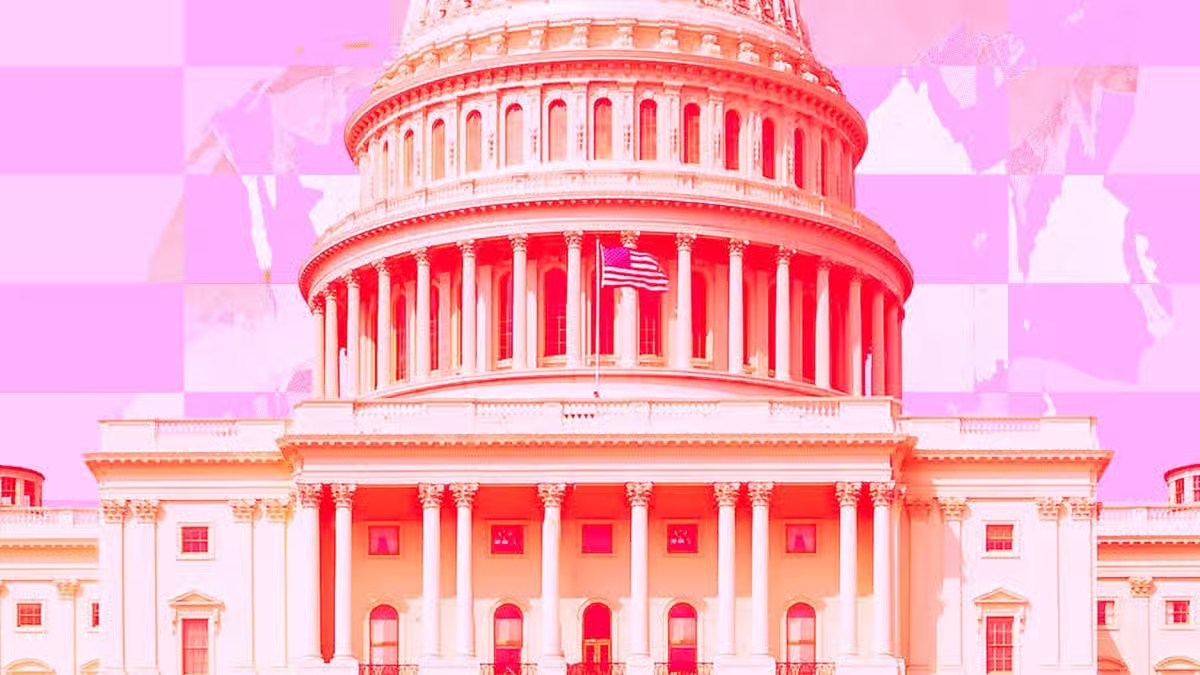
The U.S. Senate Banking Committee has advanced a significant piece of legislation aimed at establishing a comprehensive regulatory framework for the digital asset industry. The bill, known as the Clarity Act, passed a committee vote with a 15-9 margin, securing bipartisan support including votes from Democratic Senators Ruben Gallego and Angela Alsobrooks. This development follows months of complex negotiations involving governmental bodies, industry participants, and financial trade groups.
Key Takeaways
- The Senate Banking Committee voted 15-9 to advance the Clarity Act, a bill designed to regulate the digital asset market.
- The legislation seeks to divide regulatory authority over digital assets between the Securities and Exchange Commission (SEC) and the Commodity Futures Trading Commission (CFTC).
- Democratic Senator Ruben Gallego expressed support but indicated he would vote against the bill on the Senate floor if ethics provisions related to conflicts of interest are not adequately addressed.
- Concerns regarding illicit finance and the treatment of non-custodial developers under the Blockchain Regulatory Certainty Act (BRCA) were a significant point of discussion.
- An amendment proposed to restrict federal officials, including the President, from engaging in digital asset transactions did not pass.
The Clarity Act represents a pivotal effort to introduce federal-level regulation to the cryptocurrency sector, a move that has been largely absent to date. The bill’s structure aims to clarify jurisdictional boundaries, assigning oversight responsibilities to the SEC and CFTC. This division of authority is a critical element in defining how various digital assets and activities will be governed.
The legislative journey of the Clarity Act has been marked by considerable debate and adjustments. While the House of Representatives passed its version of a similar bill last year, progress in the Senate was stalled. An earlier Senate Agriculture Committee bill advanced without Democratic backing, and the Banking Committee’s markup was postponed previously due to industry concerns, notably from Coinbase regarding stablecoin provisions. The inclusion of Democratic support in the recent committee vote signifies a potential shift towards broader consensus.
However, the path forward is not without its challenges. Senator Gallego’s conditional support highlights the ongoing sensitivity around ethics and conflict-of-interest provisions. His statement that future support is contingent on resolving these ethical considerations underscores the meticulous scrutiny the bill faces before a full Senate vote. The timing of this legislative push is also significant, with upcoming elections potentially impacting the political landscape for digital asset regulation.
The potential implications of this bill are far-reaching for companies and assets operating within the digital economy. Clear regulatory guidelines could foster greater institutional adoption and investor confidence. Conversely, certain provisions may impose new compliance burdens or alter existing operational models for crypto businesses. The scoring of this vote by advocacy groups like Stand With Crypto indicates the high stakes involved for lawmakers, who are being monitored on their stance towards the evolving digital asset market.
A substantial number of amendments were filed ahead of the markup, indicating the complexity and breadth of issues being considered. These amendments touched upon key areas such as stablecoin rewards, ethical conduct, and decentralized finance (DeFi). The process of reviewing and voting on these amendments reflects the diverse interests and concerns that lawmakers are attempting to balance.
Analyzing the Regulatory Precedent
The advancement of the Clarity Act through the Senate Banking Committee could establish a significant regulatory precedent for the digital asset industry in the United States. If the bill eventually becomes law, it would represent the first comprehensive federal legislative framework specifically designed for cryptocurrencies and related technologies. This would move the U.S. towards a more defined regulatory approach, potentially influencing global regulatory trends.
The division of authority between the SEC and CFTC, as proposed in the Clarity Act, aims to address the long-standing debate over whether digital assets are primarily securities or commodities. This jurisdictional clarity is crucial for market participants, as it determines the applicable rules and enforcement bodies. The proposed framework could set a benchmark for other jurisdictions grappling with similar regulatory questions. Furthermore, the way the bill addresses issues like decentralized finance and non-custodial developers could shape future policy discussions on innovation versus compliance.
The committee’s consideration of amendments related to illicit finance and the potential impact on law enforcement’s ability to combat financial crime highlights the tension between fostering innovation and ensuring market integrity. The inclusion of language within the Blockchain Regulatory Certainty Act (BRCA) to clarify the status of non-custodial developers, while also aiming to prevent misuse for criminal purposes, demonstrates an attempt to strike a balance. The outcome of these discussions could influence how non-custodial technologies are regulated globally, setting a precedent for how regulators engage with emerging decentralized technologies.
Illicit Finance and Developer Protections
A central point of contention during the legislative process revolved around the Blockchain Regulatory Certainty Act (BRCA). The crypto industry advocated for language clarifying that non-custodial developers should not be classified as money transmitters. However, law enforcement agencies expressed concerns that such a clarification could impede efforts to combat financial crime. A compromise was reached through an amendment that allows for criminal charges against non-custodial developers if they have the “specific intent” to facilitate criminal activities.
This compromise seeks to address the prosecution of individuals involved in crypto protocols, such as the case involving Tornado Cash developer Roman Storm. The added language aims to ensure that developers cannot evade legal responsibility if they knowingly participate in illicit financial activities. Nevertheless, the interpretation and application of “specific intent” remain critical factors in future enforcement actions.
Despite attempts at compromise, Senator Catherine Cortez Masto introduced an amendment that, according to some interpretations, could shift the BRCA from a protective measure for developers to a tool for prosecution. This highlights the persistent challenges in balancing the protection of developers and decentralized technologies with the imperative to prevent illicit financial flows. The retention of the BRCA in its current form following the markup was viewed as a significant win by industry proponents.
Another notable development was Senator Mark Warner’s withdrawal of an amendment focused on “Responsible Innovation in Decentralized Finance.” While withdrawn, Senator Warner expressed a continued commitment to working towards a comprehensive bill, indicating that discussions on DeFi regulation are ongoing and complex.
Ethical Concerns and Political Influence
Concerns have also been raised regarding potential conflicts of interest related to political figures and their involvement in the digital asset space. Democrats on the committee have voiced apprehensions about financial transactions involving digital assets by public officials. An amendment proposed by Senator Chris Van Hollen sought to prohibit the President, Vice President, and other federal officials, along with their families, from owning or promoting digital assets. This amendment, however, failed to pass, with a vote of 13-11, indicating a lack of consensus on imposing such strict ethical limitations.
Source: : www.theblock.co