


Bipartisan Senators Push for Immediate AI Export Ban to Southeast Asia Amidst China Concerns
In a significant move that could impact global tech supply chains, Senators Elizabeth Warren (D-MA) and Jim Banks (R-IN) are calling for an immediate suspension of advanced technology export licenses to certain Asian destinations. The bipartisan duo has urged Secretary of Commerce Howard Lutnick to act swiftly, citing concerns that China is acquiring American-developed AI chips through intermediaries in Southeast Asia.
Key Takeaways
- Senators Warren and Banks have requested a complete freeze on exports of NVIDIA chips and servers to Chinese “intermediaries” in Malaysia, Thailand, Vietnam, and Singapore.
- The demand stems from evidence suggesting fraudulent acquisition of AI chips by China.
- Recent indictments against Super Micro Computer (SMCI) affiliates for allegedly violating export controls highlight the seriousness of these concerns.
The senators’ letter specifically targets NVIDIA chips and servers, aiming to prevent their diversion to China via countries like Malaysia, Thailand, Vietnam, and Singapore. This action comes in the wake of a U.S. government indictment against three Super Micro Computer (SMCI) affiliates, including its co-founder and third-largest shareholder. They are accused of violating export controls by allegedly funneling billions of dollars worth of AI server equipment to China through illicit means.
This proposed export suspension underscores a growing unease within U.S. policy circles regarding the security implications of advanced AI technology falling into the hands of geopolitical rivals. The senators emphasize the need for robust controls to ensure that cutting-edge American innovations are not exploited.
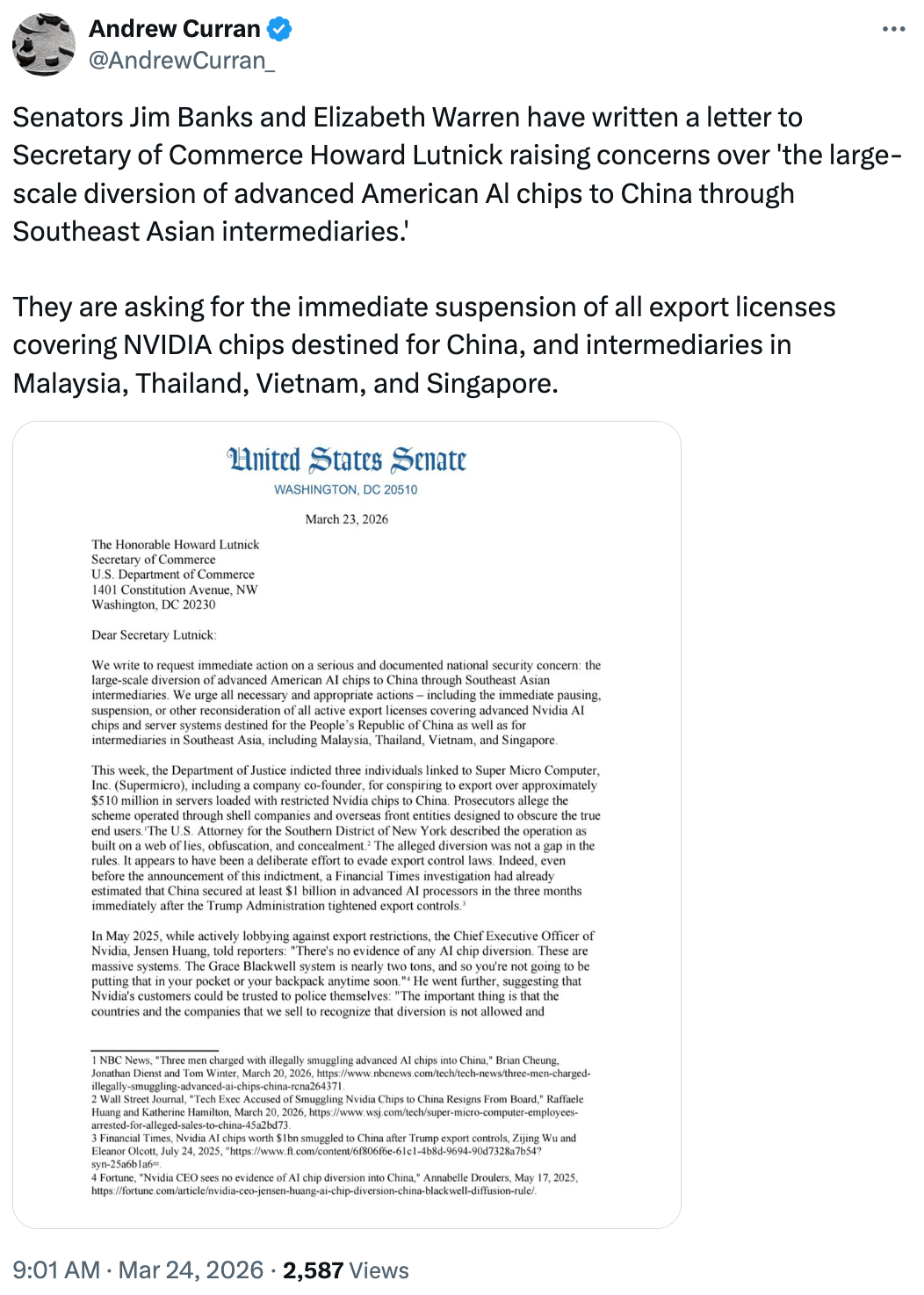
On X, a post highlighted the recent indictment of Super Micro Computer (SMCI) affiliates for allegedly violating export controls by illegally diverting billions worth of AI server equipment to China. The post emphasizes that the senators’ request for a suspension of AI chip exports to Southeast Asia is a direct response to this evidence.
Potential Value Analysis: The Impact of Export Controls on AI Innovation
The immediate effect of such an export ban would likely be a significant disruption to the AI hardware supply chain. Companies relying on chips manufactured by NVIDIA, particularly those with operations or sales channels in Southeast Asia, could face considerable challenges in meeting demand. For smaller firms and “alpha-hunters” seeking early-stage opportunities, this could translate into several potential outcomes:
- Increased Demand for Alternatives: A restriction on leading chip manufacturers could spur interest and investment in alternative AI hardware solutions and chip developers.
- Supply Chain Bottlenecks: Reduced availability of high-end chips could lead to longer lead times and higher prices for AI-powered products and services.
- Geopolitical Shifts: Such a move might accelerate efforts by other nations to develop their indigenous AI chip capabilities, potentially leading to a more fragmented global market.
- Regulatory Scrutiny: Businesses involved in AI hardware manufacturing and distribution will likely face heightened scrutiny regarding their export compliance procedures.
While the senators’ primary goal is national security, the ripple effects on the rapidly evolving AI sector are undeniable. The swiftness with which these controls are implemented, and the clarity of the regulations surrounding them, will be crucial factors for any participant looking to capitalize on or adapt to these changes.
Source: : www.bankless.com