

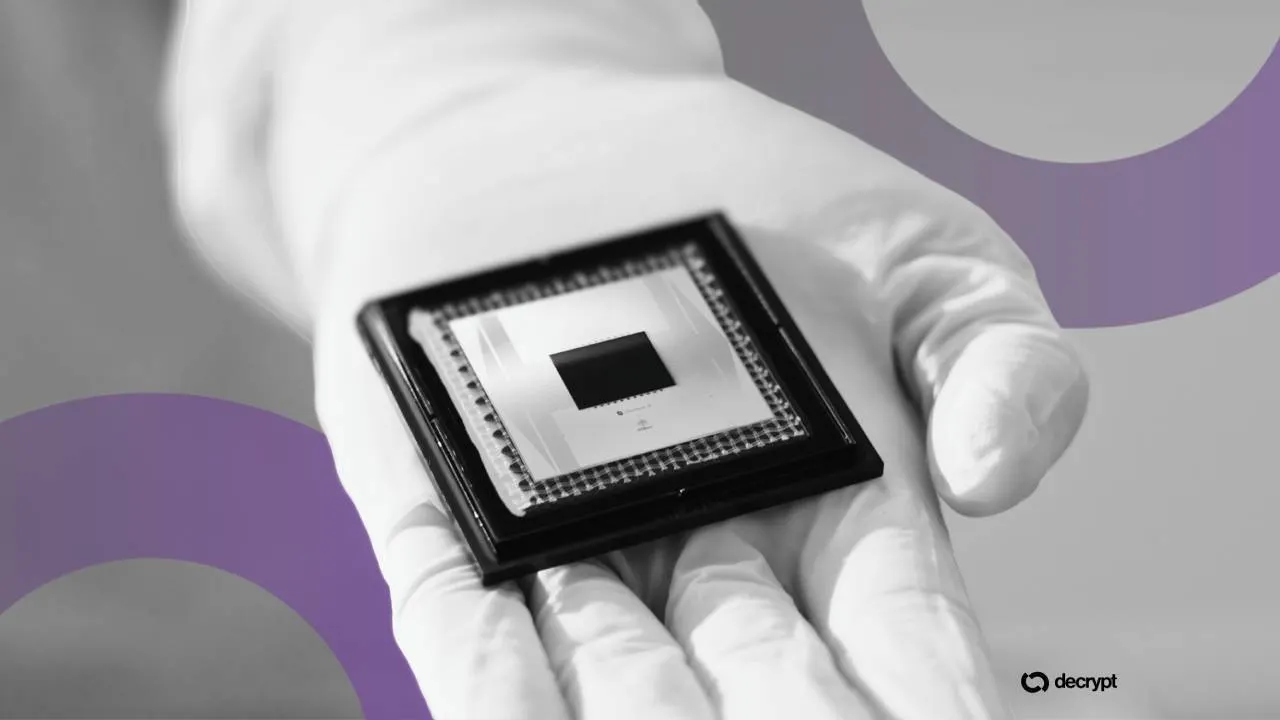
New research from the California Institute of Technology indicates that quantum computers capable of breaking current cryptographic standards may emerge sooner than previously estimated, potentially impacting the security of major blockchain networks like Bitcoin and Ethereum.
Key Takeaways
- Recent studies suggest that quantum computers might require as few as 10,000 to 20,000 logical qubits to compromise modern encryption methods.
- An innovative error-correction approach for neutral-atom quantum computers could accelerate the development of machines capable of executing Shor’s algorithm.
- This advancement heightens the urgency for the cryptocurrency industry and global digital infrastructure to transition to quantum-resistant cryptography.
The findings, stemming from a collaboration between Caltech and quantum computing startup Oratomic, outline a novel neutral-atom system. This system utilizes lasers to trap and control individual atoms, which serve as qubits. The development suggests that a fault-tolerant quantum computer could potentially run Shor’s algorithm, a quantum computation that could derive private keys from public keys used in Bitcoin’s elliptic-curve cryptography, using as few as 10,000 reconfigurable atomic qubits.
Dolev Bluvstein, co-founder and CEO of Oratomic and a visiting associate in physics at Caltech, highlighted the accelerating pace of quantum computing development. He noted that while quantum computers were once widely considered to be a decade or more away from practical application, advancements have significantly shortened this timeline. Bluvstein contrasted the current estimates with projections from just over ten years ago, which suggested a need for up to one billion qubits for Shor’s algorithm, when laboratory systems were limited to around five qubits.
Current quantum computing paradigms often necessitate a substantial overhead of physical qubits to create a single, stable logical qubit required for complex calculations. Traditional error-correction methods, for instance, might need approximately 1,000 physical qubits for one logical qubit. This overhead has historically pushed estimates for practical, fault-tolerant quantum systems into the millions of qubits, thus extending the timeline for machines that could threaten widely adopted cryptographic standards like RSA and elliptic-curve cryptography, fundamental to Bitcoin and Ethereum.
Bluvstein pointed out that current experimental systems are already demonstrating the capability to handle thousands of physical qubits, and in some instances, exceeding 6,000. This progress suggests that the threat posed by quantum computing to existing cryptography may materialize much sooner than anticipated.
Caltech researchers previously announced in September the operation of a neutral-atom quantum computer with 6,100 qubits, achieving an impressive accuracy rate of 99.98% and coherence times of 13 seconds. This achievement marked a significant step towards error-corrected quantum machines and reignited concerns about the potential impact of Shor’s algorithm on Bitcoin’s security.
In response to this evolving threat, governments and technology companies are actively exploring and beginning to implement post-quantum cryptography (PQC) – encryption methods designed to resist quantum attacks. However, experts caution that substantial engineering hurdles remain, particularly in scaling quantum systems while maintaining the exceptionally low error rates required for reliable computation.
Bluvstein elaborated that simply achieving 10,000 physical qubits is a near-term possibility, but it is not the sole determinant of a functional quantum computer. He likened the process to building a classical computer, emphasizing that assembling the necessary components is only the initial step in a highly complex and non-trivial engineering endeavor.
Despite these challenges, Bluvstein expressed optimism that a practically viable quantum computer could become available before the end of the current decade.
This development follows closely on the heels of new findings from Google researchers, who also suggested that future quantum computers could break elliptic curve cryptography with fewer resources than previously believed. These parallel advancements underscore the growing urgency for a widespread transition to quantum-resistant cryptographic solutions.
While the cryptocurrency sector has begun to address quantum risk more directly, Bluvstein stressed that the implications extend far beyond blockchain technology, affecting the entire spectrum of modern digital infrastructure. He noted that the potential impact spans the Internet of Things, internet communications, critical network hardware like routers, and even satellite systems, underscoring the broad and complex nature of the required security migration.
Long-Term Technological Impact
The accelerating progress in fault-tolerant quantum computing presents a profound inflection point for the future of digital security and blockchain innovation. If quantum computers reach the capability to break current public-key cryptography, it will necessitate a fundamental overhaul of the cryptographic primitives underpinning not only cryptocurrencies but also secure communication, digital signatures, and vast swathes of internet infrastructure. This will spur significant advancements in post-quantum cryptography algorithms, potentially leading to new standards in encryption and authentication. For Layer 2 solutions and Web3 development, the implication is a need to integrate quantum-resistant security measures from the ground up, ensuring the long-term viability and trustworthiness of decentralized applications and ecosystems. Furthermore, the challenges and advancements in quantum computing may also influence the development of new computational paradigms, potentially inspiring novel approaches in AI integration and distributed ledger technologies that are inherently resilient to future computational threats.
Original article : decrypt.co