

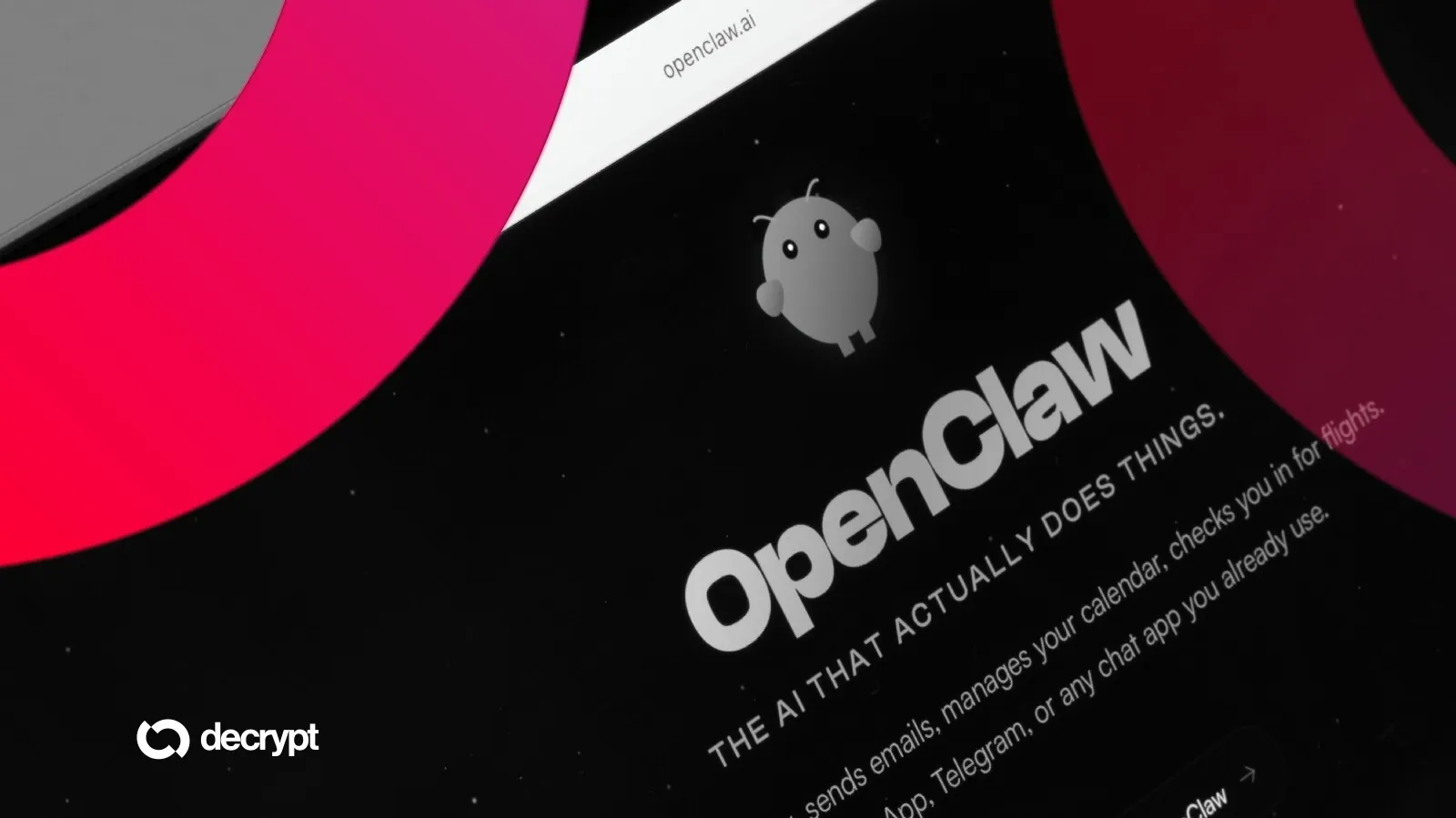
The burgeoning popularity of the OpenClaw AI agent project has unfortunately attracted malicious actors, leading to a sophisticated phishing campaign targeting developers. Threat actors are impersonating OpenClaw through fake GitHub accounts, luring unsuspecting developers with promises of lucrative airdrops, and ultimately aiming to compromise their digital wallets.
Key Takeaways
- A phishing campaign is actively targeting developers associated with the OpenClaw AI project.
- Attackers are using fake GitHub accounts to inform developers they have won $5,000 in $CLAW tokens, directing them to a cloned OpenClaw website.
- The fake website features a hidden connection prompt designed to drain users’ cryptocurrency wallets.
- Security firm OX Security identified obfuscated JavaScript and a command-and-control (C2) server used to conceal the malicious activity.
- The campaign appears to target users who have starred OpenClaw-related repositories on GitHub, lending an air of credibility to the scam.
- No confirmed victims have been reported, and the malicious GitHub accounts were quickly deleted after their launch.
Security platform OX Security detailed the ongoing operation, which involves creating fake GitHub profiles to initiate discussions within attacker-controlled repositories. These fake accounts then tag numerous developers, claiming they have been selected for an OpenClaw token allocation and are eligible to receive $5,000 worth of $CLAW tokens. Developers are then instructed to visit a fraudulent website that closely mimics the legitimate openclaw.ai domain.
This meticulously crafted phishing site includes a deceptive “Connect your wallet” button. Upon interaction, it triggers a hidden mechanism to facilitate the theft of funds from the user’s connected cryptocurrency wallet. Moshe Siman Tov Bustan, research team lead at OX Security, noted similarities between this campaign and previous phishing attempts targeting the Solana ecosystem, indicating a potential pattern in the threat actors’ methods.
The timing of this campaign follows closely after OpenAI CEO Sam Altman announced that OpenClaw’s creator, Peter Steinberger, would lead the company’s expansion into personal AI agents. This high-profile association has significantly amplified OpenClaw’s visibility, making its developer community a prime target for exploitation. The transition of OpenClaw into a foundation-run open-source project further bolsters its appeal.
OX Security’s analysis revealed that the wallet-draining code was embedded within a heavily obfuscated JavaScript file named “eleven.js.” The attackers seem to be leveraging GitHub’s “star” feature to identify developers who have shown interest in OpenClaw, making the phishing attempts appear more personalized and credible. Bustan confirmed that the campaign specifically targeted individuals who had starred the OpenClaw GitHub repository.
Further investigation into the malware uncovered a “nuke” function designed to erase all wallet-stealing data from the browser’s local storage, hindering forensic analysis. The malicious code monitors user interactions through commands like “PromptTx,” “Approved,” and “Declined,” relaying encoded information, including wallet addresses and transaction details, back to a C2 server. Researchers have identified a specific crypto wallet address, 0x6981E9EA7023a8407E4B08ad97f186A5CBDaFCf5, believed to belong to the threat actor for receiving stolen funds.
According to OX Security, the malicious GitHub accounts were established recently and subsequently deleted within hours of the campaign’s launch. Fortunately, as of the report’s publication, no confirmed victims have been identified.
The Evolving Threat Landscape: AI Agents and Blockchain Security
The OpenClaw incident highlights a critical intersection of advancements in artificial intelligence and the security challenges inherent in the blockchain ecosystem. As AI tools like OpenClaw become more powerful and integrated into developer workflows, their growing prominence naturally attracts attention from malicious actors. The sophisticated nature of this phishing campaign, employing obfuscated code and targeted social engineering via platforms like GitHub, underscores the need for enhanced security measures within the Web3 space.
The reliance on platform-specific features, such as GitHub stars, to identify potential targets demonstrates the evolving tactics of cybercriminals. This indicates a deeper understanding of developer behavior and project ecosystems. Furthermore, the use of a C2 server and data-wiping functions suggests a coordinated and technically proficient operation aimed at maximizing stealth and evading detection.
From a blockchain innovation perspective, this event serves as a stark reminder that increased adoption and mainstream attention bring increased security risks. Projects developing cutting-edge technologies, especially those integrating AI and enabling persistent agent functionalities, must prioritize robust security protocols. This includes not only technical safeguards but also comprehensive developer education on identifying and reporting phishing attempts. The development of more advanced Layer 2 scaling solutions and secure smart contract auditing practices will be crucial in mitigating such threats as the Web3 landscape continues to expand.
Looking ahead, the integration of AI into blockchain infrastructure, while promising significant advancements, also opens new vectors for attack. The security community must remain vigilant and proactive, adapting defenses to counter increasingly sophisticated threats. The successful development and adoption of decentralized identity solutions and advanced encryption techniques will be paramount in protecting users and projects within this evolving digital frontier.
OX Security recommends that users block the domains token-claw[.]xyz and watery-compost[.]today. They also advise extreme caution when connecting cryptocurrency wallets to unfamiliar or unverified websites and to treat any GitHub issue offering token giveaways or airdrops with suspicion, especially if originating from unknown accounts. Users who may have connected their wallets should immediately revoke any pending approvals.
Original article : decrypt.co